One camera answers a tenth of it.
A forward-facing camera covers the road ahead at road speed. The damage, the struck-by risk and the disputed invoice all sit at low speed, alongside and behind the truck, where it is pointing at nothing.

MANTIS FOR CONSTRUCTION & CONCRETE
Construction and concrete fleets work where cameras go to die: mud, dust, washdown bays, tight reversing and sites with no signal. Multi-camera coverage, connectivity that follows the strongest network, and a daily report that tells you which cameras are actually working.
Build the view for your fleet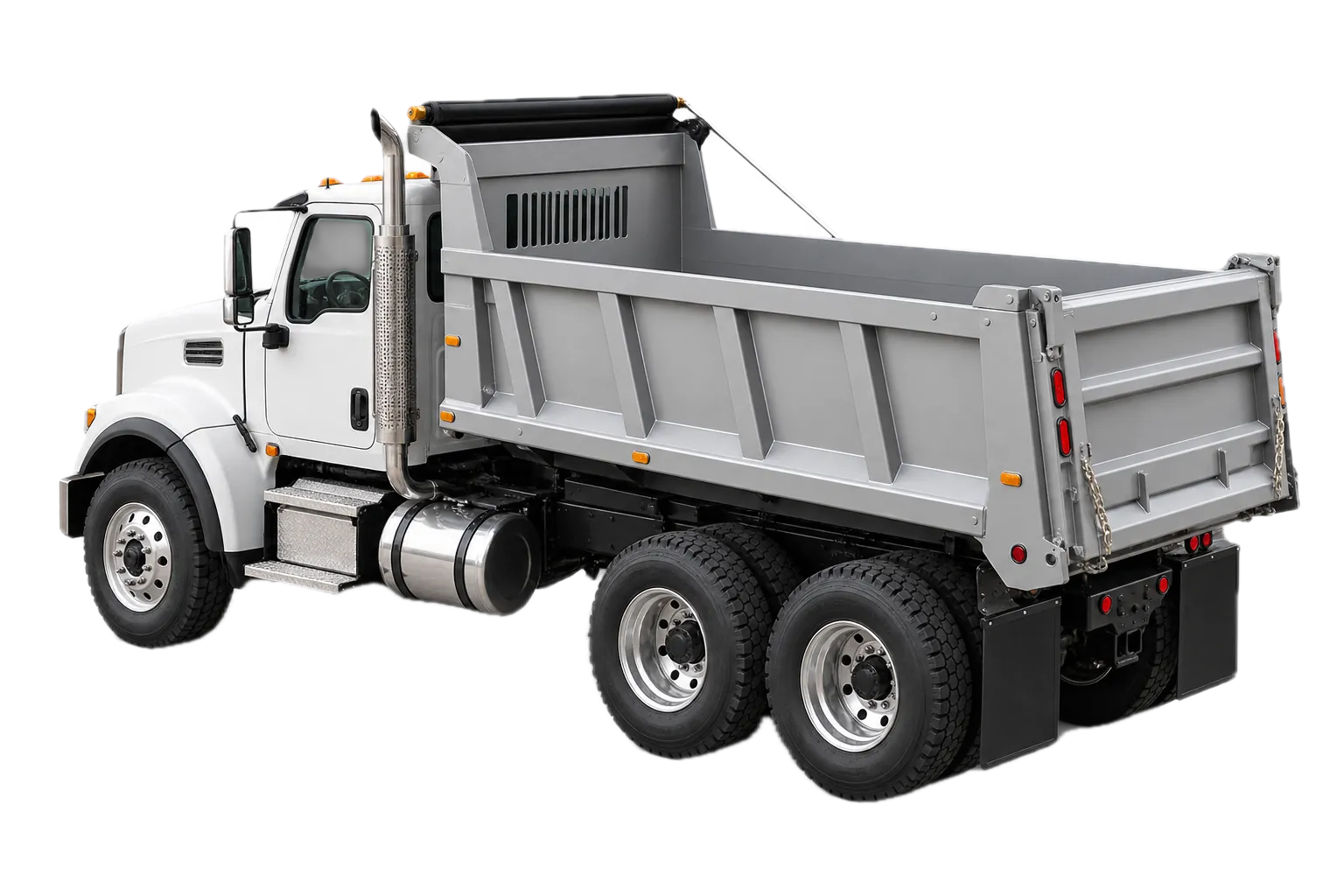 ILLUSTRATIVE VEHICLE / APPLICATION VIEW
Dump trucks, concrete mixers, boom trucks and construction support fleets
WHY CONSTRUCTION IS DIFFERENT
Almost nothing that costs a construction fleet money happens in front of the truck at speed. It happens alongside, behind, and while the body is up, on a jobsite whose layout changed yesterday.
A forward-facing camera covers the road ahead at road speed. The damage, the struck-by risk and the disputed invoice all sit at low speed, alongside and behind the truck, where it is pointing at nothing.
Gates, scaffolding, stacked materials, someone else’s equipment and pedestrians who should not be there. Layouts move daily, so the move a driver made safely last week is a different move this morning.
Damage gets attributed to whichever truck was on site last. Without footage the invoice arrives and the argument is already over, and the same is true of an injury allegation from site staff you do not employ.
A loaded mixer or a raised dump body behaves nothing like the truck the driver learned on. The cornering that causes a rollover shows up months before the rollover does, if anyone is looking.
Arrival inside the discharge window, the drum turning, what happened at the chute. When a slab fails weeks later the bill lands on the concrete unless the record says otherwise.
Quarries, cuts, basements and rural new construction. If the unit cannot upload, the evidence sits on a card in a truck two counties away, and live view is no use to anybody.
These are the patterns MANTIS sees across construction and concrete fleets rather than published statistics, and no figure is claimed for any of them. Your own exposure depends on your sites, your trucks and the work you take on.
RECON ON SITE
The same three streams as the rest of the platform, tuned to a truck that spends its working day off the road.
Harsh cornering and G-force events arrive with the video attached, so the driving behind a rollover is a coaching conversation rather than a total loss, an injury and a claim. Scores are relative comparisons for deciding where to look first, not a forecast that anything will happen.
Rear, side and load views cover the blind spots where the hits happen, so the driver sees what they are backing into and the gate, the scaffolding and the parked pickup stay intact. In-cab assistance supports the driver’s judgment and your safety program rather than replacing either.
Pull the clip remotely and share it. Damage claims, injury allegations, missed deliveries and disputed time on site, all answered with time-stamped multi-angle video instead of a statement taken three weeks later.
Risk scores in RECON examples use demo data. A harsh cornering event may be a defensive maneuver: review the footage, the context and the driver’s account before drawing a conclusion, and never let a score alone decide an employment, underwriting or liability outcome. On Demand retrieval depends on power, connectivity and retention settings.
THE QUESTIONS THAT MATTER
Find the vehicle, the trip and the time, then the approach and working-area views around it, before the account is settled on somebody else’s word.
Line up arrival, the drum and the chute against the delivery record while the job is still fresh, rather than weeks later when the slab is the subject.
Plan retention and retrieval around the sites you actually work, so a vehicle in a quarry is not a vehicle you cannot reach.
WHAT GOES ON THE TRUCK
A construction or concrete configuration puts cameras where the job goes wrong, and lets the body going up or the drum turning decide what records and what the driver sees.
Camera positions, counts, ratings and AI detections depend on the configuration selected for each vehicle type. IP69K, 95% humidity and the anti-vibration construction are from the S20 side and R20 rear camera specifications; operating range is -20°C to +75°C on those cameras and -30°C to +70°C on the recorder. Confirm the rating for every position in your own configuration. A single forward camera is not a construction configuration.
Explore multi-camera systemsMANTIS HEALTH
This matters more on a construction fleet than anywhere else, because the mud that makes the footage valuable is the same mud that obscures the lens.
Video loss, memory faults and trucks that have gone offline, emailed to the people you nominate.
A critical memory fault raises a support case automatically, so the first-line checks start before you log anything.
Footage retrieval support for the days when the clip is needed fast, and replacement handled under your package terms.
Offline is not proof of camera failure, and monitoring alone does not guarantee useful recording or retrievable footage. A dirty lens is not always visible to a health check. Whether a truck with a reported fault keeps working is a decision under your own safety program. Installation is quoted separately.
WHY THESE TRUCKS BREAK OTHER CAMERAS
None of them is the camera on the windshield.
CONNECTIVITY
Most multi-network devices are steered. They hold a preferred carrier and switch only when it drops out completely, so a weak signal on the preferred carrier beats a strong one from the wrong carrier.
MANTIS runs unsteered multi-network connectivity. The device looks for the best available network and connects to whichever is strongest where the truck is standing. For a fleet working quarries, cuts and rural new construction, that is the difference between live view and no signal.
Worth asking whoever supplies your cameras today whether the SIM is single-carrier or steered. Most fleets have never been told.
Where no major carrier has coverage, no device can help. The claim is that MANTIS uses the network that works, not that coverage is everywhere. Uncapped data is subject to fair use policy, and network coverage, roaming, plan availability and retrieval performance vary by region and configuration.
ENVIRONMENT
Externals in this configuration are rated IP69K where high-pressure, high-temperature washdown is part of the daily cycle, with humidity to 95% and anti-vibration construction through both the camera and the recorder.
A consumer dashcam is rated for a windshield. Put one on a mixer chassis and the failure is a question of when, not whether.
Ratings are per component and per position. IP69K, the humidity figure and the operating ranges come from the S20 and R20 camera specifications; the recorder operates from -30°C to +70°C. Confirm the rating for each position in your configuration at the survey.
INSTALLATION
Most camera failures on site trucks are not camera failures. They are cabling failures.
Water gets in at the joints. MANTIS specifies the install per vehicle type: sealed connectors, cable runs routed away from chassis flex and heat, cable lengths cut so joins are not improvised on the day, and mounting positions chosen for the truck rather than for the installer.
Installation is quoted and carried out per vehicle type. The specification is agreed at the installation survey.
BRING YOUR FLEET. BRING YOUR QUESTIONS.
Let’s demonstrate the camera views, health checks and evidence workflow your operation actually needs.
Get a fleet risk assessment