FLEET RISK INTELLIGENCE · SINCE 2018
USA/UK & IrelandBecome a Partner ↗
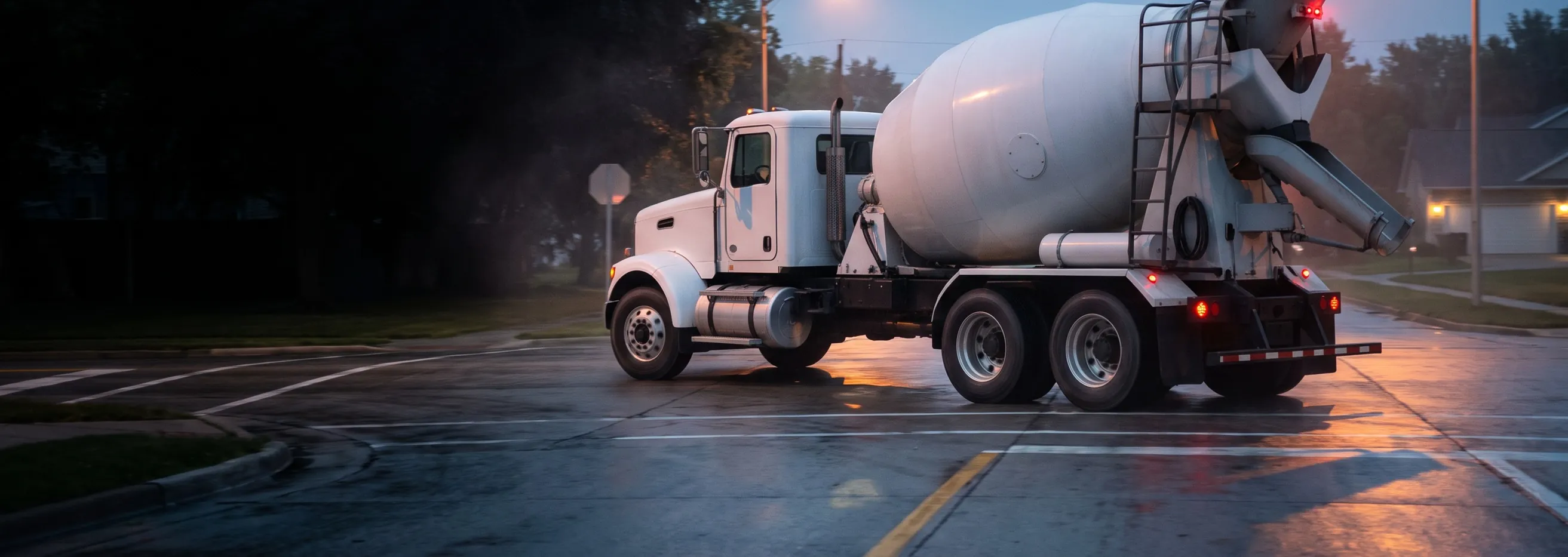
Illustrative image of a U.S. conventional-cab concrete mixer turning across a wet residential street at dusk. AI generated.

USA/Solutions/By vehicle/Dump trucks & mixers

Concrete mixers and dump trucks

Concrete mixers and dump trucks. Prove the pour.

A loaded mixer is top-heavy, running against the clock, and backing onto a job site nobody has walked since yesterday. MANTIS puts cameras on every side of it, the drum and chute included, so you can see what happens around the truck and keep the record from the batch plant to the chute.

Predict the risk. Prevent the collision. Prove what happened.

Built for U.S. ready-mix and construction fleets: rear- and front-discharge mixers, tandem and tri-axle dump trucks, and the trucks that run between the plant, the pit and the site.

  • Up to 8 camerasper truck, drum and chute views included, configuration dependent
  • 60 secondsto find video from every side, going back a full month
  • Live camera healthMANTIS Health checks every camera, every morning

Camera count, drum and chute views, night vision and AI detections depend on configuration. Finding video within 60 seconds assumes the truck is powered and connected; a month of footage depends on the recorder configuration. Assistance supports driver judgment; it does not replace it or guarantee prevention. Images on this page are illustrative and AI generated, pending fleet photography.

Damage, injury and claims

Dashcams alone provide little protection.

Damage happens at five miles an hour behind the truck, on a right turn with a full drum, and at the chute when the contractor says the load was wrong. A forward-facing dashcam sees none of it.

  • 12mphThe speed at which a loaded mixer can roll over.NRMCA study of 136 mixer rollovers, 2005
  • 10xMixer rollover rate against the average vehicle on the road.NRMCA 2014 Fleet Survey
  • 794Estimated DOT-reportable accidents involving mixers each year.NRMCA benchmarking surveys, 2014 to 2017
  • 357Fatalities a year involving mixers and dump trucks, seven-year average.ENR, 2018

01

A full drum on a dry, level road.

NRMCA’s 2017 rollover survey found most mixer rollovers happen with a loaded drum on dry, level pavement, and pointed to drivers losing focus. Not ice, not a hairpin. A routine run, and the driving habits behind it show up in the event data months earlier, if someone is watching.

02

Backing onto a pour.

Forms, rebar, pump hose, a homeowner’s driveway, and people standing where they should not be. A spotter helps, but that spotter does not always see both sides of the truck at once. NRMCA has found 11% of a mixer fleet has a backing accident in a year (Concrete Products, 2008).

03

The load gets the blame.

When a slab fails three weeks later, the bill lands on the concrete unless the record shows arrival inside the discharge window, the drum turning, and what happened at the chute.

04

Overhead lines and a turning drum.

Pump booms, conveyor belts and raised dump bodies reach into overhead power lines. Crew reach toward the hopper or climb the ladder while the drum is still turning. Side and drum-view cameras show who was standing where, so the near miss gets talked about the next morning, with the footage on the table.

Sources. 10x compares a mixer rollover rate of 0.5% a year (NRMCA 2014 Fleet Survey) with an average of 0.05% across all vehicles, most of them passenger cars. 794 is an estimate built from NRMCA benchmarking surveys; federal data does not track mixer trucks separately from other Class 8 trucks. 357 includes mixers and dump trucks (ENR, 2018). MANTIS RECON is a collision prevention and evidence system; it does not replace safe work practices, trained spotters or site planning.

Camera coverage

Cameras on every side of the truck.

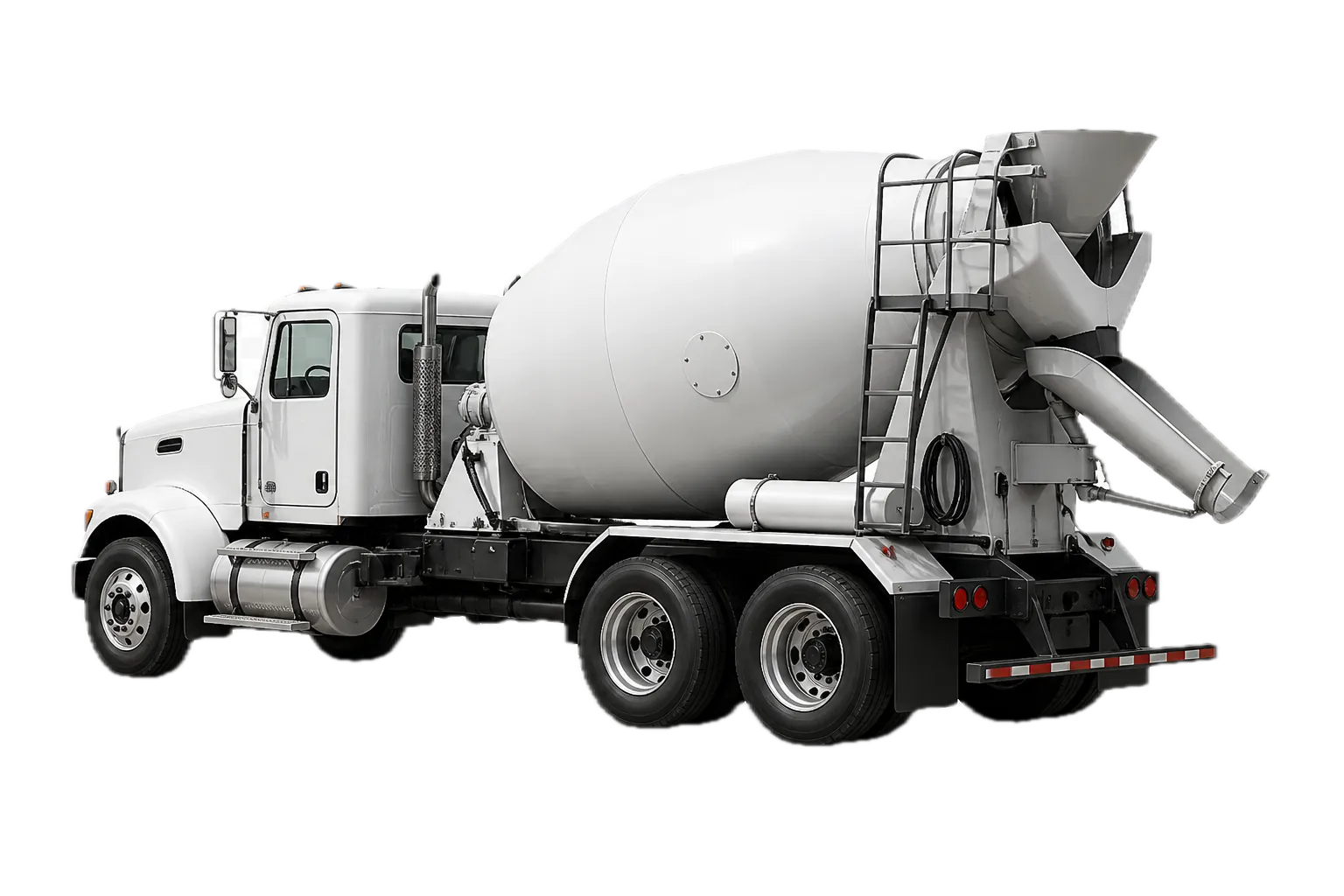
A typical mixer configuration puts cameras where the day actually goes wrong: ahead, down both sides, across the rear, over the drum and chute and, if you choose, in the cab. Every view records continuously and can be pulled through RECON, so the plant sees what the driver saw.

  • Forward. The car that cuts in front of the drum, the intersection approach and the following distance with a full load.
  • Left and right side. Right turns with a full drum, the crew walking alongside, and the curb, the mailbox and the parked car on a street that was never laid out for a mixer.
  • Rear. Backing onto forms, rebar, a pump hose or a homeowner’s driveway, with the spotter in view.
  • Drum and chute. Recording can start when the drum reverses to discharge, through a PTO or trigger input, so the discharge is on video from the first concrete down the chute.
  • Driver-facing, optional. Flags phone use, fatigue and seat belt events for review, with a privacy mode for when the driver is off duty.

Camera positions, counts and AI detections depend on the configuration selected for each truck type. Dump trucks, front-discharge mixers and pump trucks need a different layout; ask us about yours.

Illustrative render of a U.S. conventional-cab rear-discharge concrete mixer, viewed from the driver side rear.
Illustrative render with indicative camera positions. Final positions are agreed per truck type in the configurator and at the installation survey.

Multi-cam video, delivered quickly

Find video from every side within 60 seconds, going back a full month.

Even when no event was detected: the slab complaint three weeks later, the cracked driveway, the standby hours nobody can prove. Predict, Prevent and Prove, tuned to a mixer fleet.

Predict

See who takes turns the way mixers roll.

Harsh cornering and G-force events arrive with the video attached, so you can see which drivers are taking turns the way mixers roll, and raise it while it is still a conversation. Scores are relative comparisons that tell you where to look first. They are not a forecast that a rollover will happen.

Prevent

Make the risk visible.

No camera stops an accident on its own. It makes the risk visible. Side and rear cameras show who is standing behind the truck, walking under the chute or working without a hard hat, so a manager can raise it the next morning. The driver-facing camera flags phone use, fatigue and seat belt events for review.

Prove

From the plant gate to the chute.

Time-stamped, multi-angle video of the arrival time, the drum turning and the discharge. Pull it remotely and share it with the contractor, the insurer or your attorney.

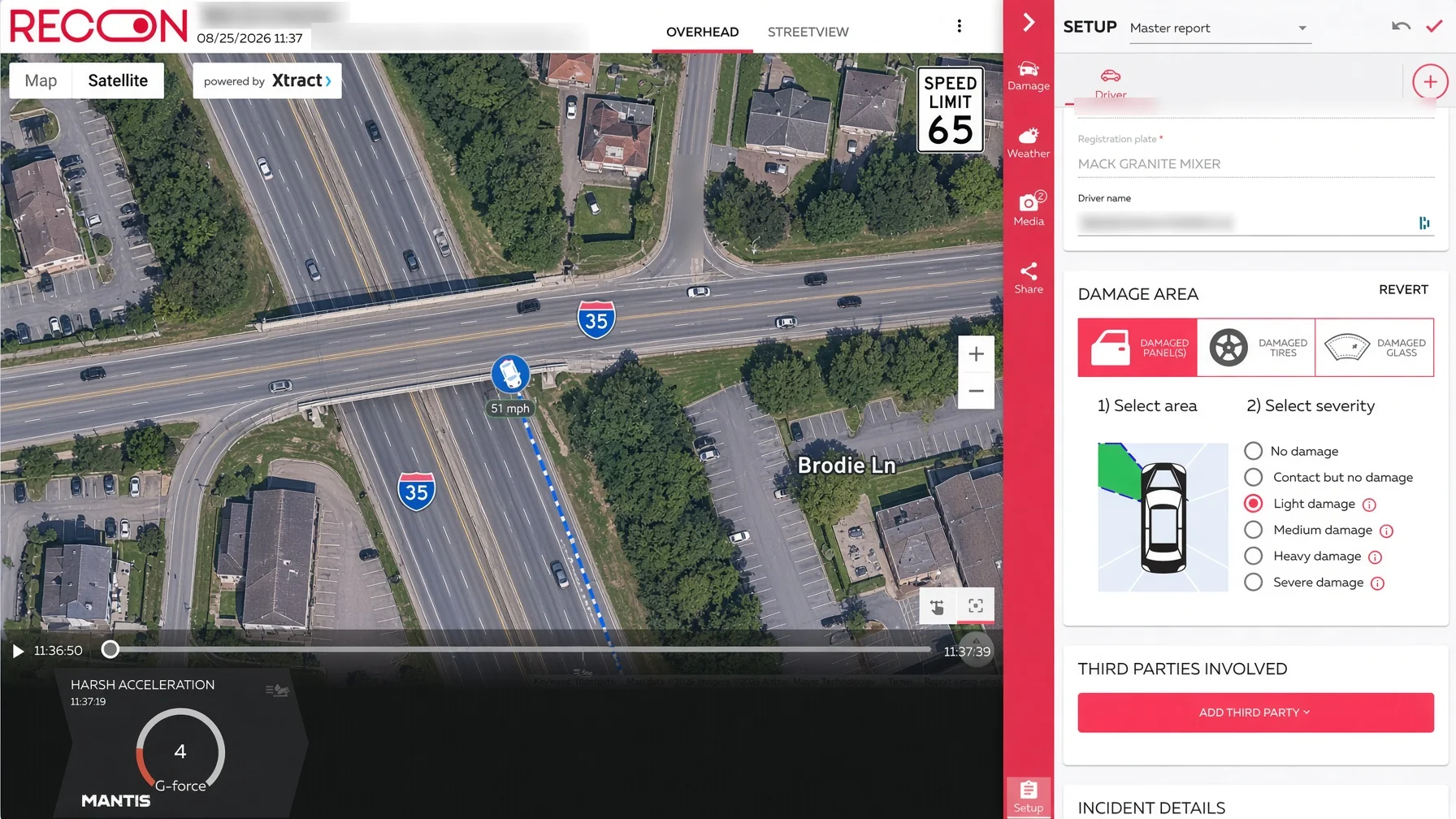
RECON Collision Insights screen with demo data: a harsh acceleration event on an overhead satellite map, showing speed against the speed limit and a G-force reading, beside a damage report form.
Illustrative screen, demo data.
  1. Video and telematics on one timeline: speed, G-force and location sit next to the footage from every camera.
  2. Collision Insights builds a reconstruction report from the event, with map playback and Street View, ready for the insurer.
  3. Share it on a secure, time-limited link, or download the MP4. Full-length footage, not a 30-second clip.

Risk scores in RECON examples are shown out of 15 and use demo data. A harsh corner may have a reason: review video, context and the driver’s account before drawing a conclusion, and never let a score alone decide an employment, underwriting or liability outcome. Video cannot establish injury severity. MANTIS does not guarantee premiums, settlements, admissibility or legal outcomes. Retrieval within 60 seconds assumes the truck is powered and connected; a month of footage depends on the recorder configuration.

Built for the plant

How many of your cameras worked this morning?

A mixer lives in washdown, cement dust, vibration and heat, and a camera that died overnight is usually found on the day its footage was needed. MANTIS Health checks every camera, recorder and connection and reports to the plant before the first load goes out.

  • Washdown rated. External cameras IP67, and IP69K where high-pressure washdown is part of the day.
  • Weather rated. -40°F to 158°F, anti-vibration construction.
  • Signal that follows the truck. Multi-network connectivity joins the strongest network where the truck is standing. With no coverage, footage stores on the vehicle and uploads when signal returns.
  • Installed for the vehicle. Sealed connectors, cable runs routed away from chassis flex and heat, camera positions chosen for mixers.
  • Checked every morning. A daily MANTIS Health report flags video loss, memory faults and offline vehicles.

Offline is not proof of camera failure. Monitoring or power alone does not guarantee useful recording or retrievable footage. Whether a truck with a reported fault takes a load is a decision under your own safety program.

MANTIS RECONConcept · demo data

Fleet health, North Plant, 5:10 AM

24 mixers on the board. One drum camera fault raised overnight.

Trucks ready23 / 24All cameras reporting
Cameras online143 / 144Checked 5:08 AM
Recorders24 / 24Recording
Open faults1Needs attention
Fault: Mixer 112, DRUM AND CHUTE camera, no signal since 9:47 PM. First load 5:45 AM.
Open shop ticket

Concept illustration of the MANTIS Health view using fictional demo data. Truck names, times and counts are not real fleet data.

From the plant to the pour

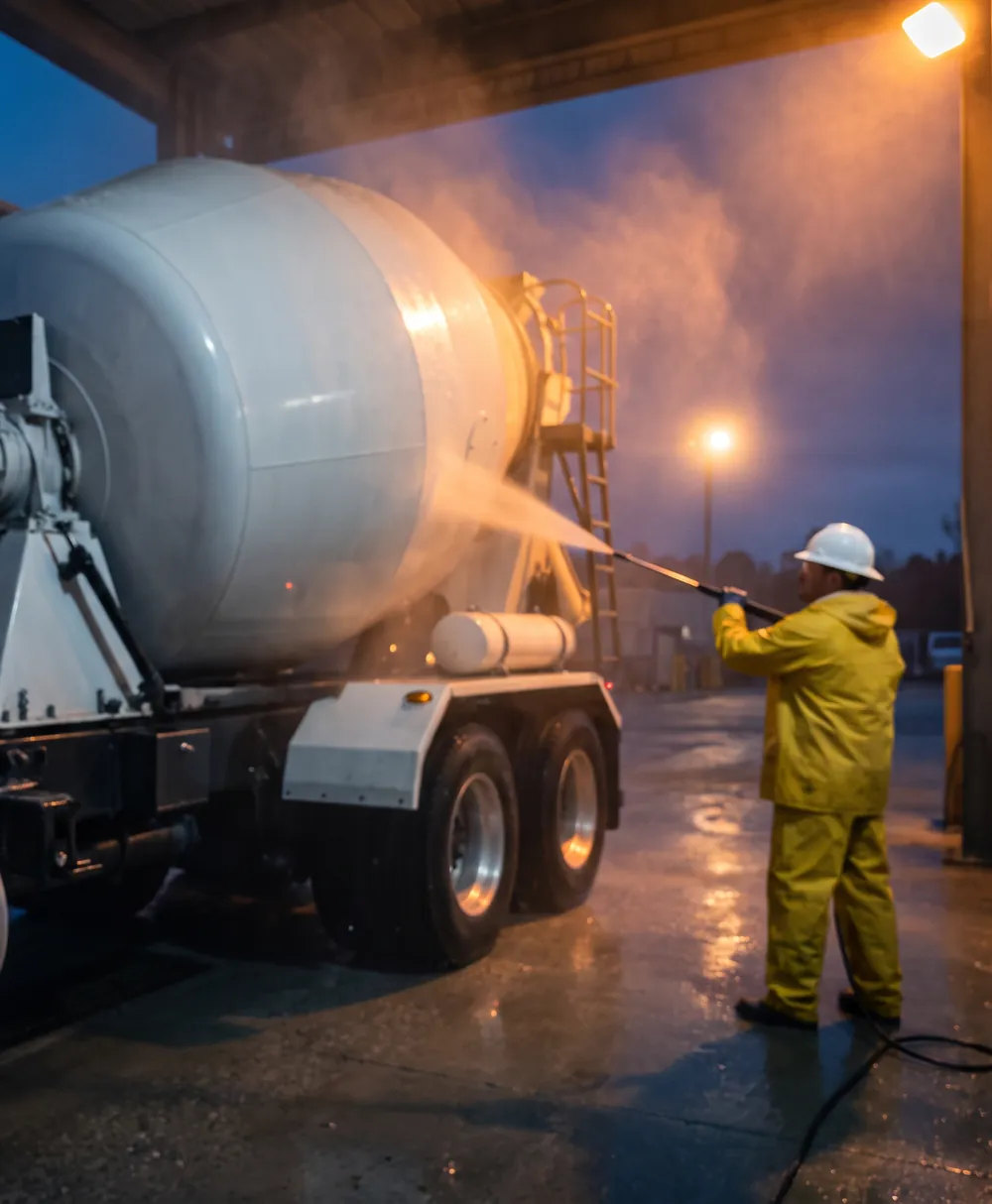
Pressure washers at the end of every shift, slurry on the lens and a drum view that has to work in the dark at a 5 AM pour.

Illustrative image of a worker in a hard hat and rain gear pressure-washing a concrete mixer drum under plant lighting. AI generated.
Illustrative washdown image, generated for this page rather than captured at a plant. External cameras are IP67, and IP69K where high-pressure washdown is part of the day.
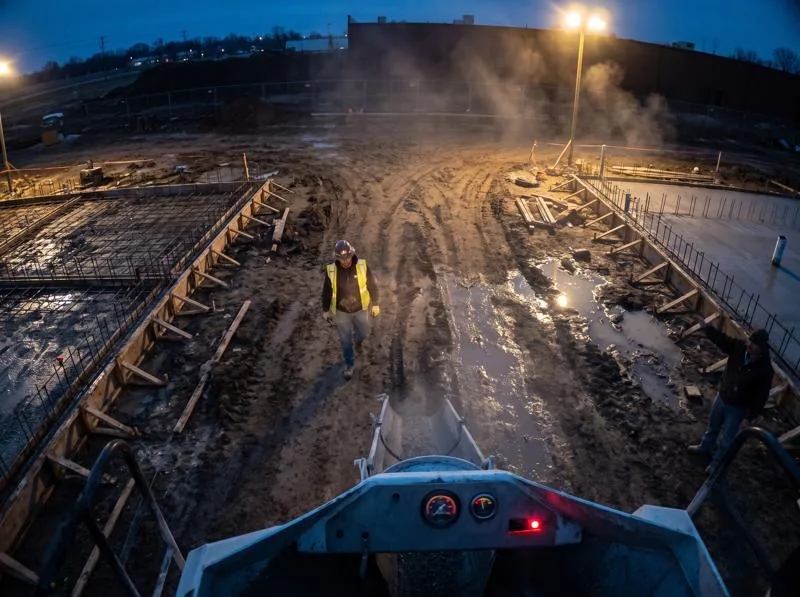
Illustrative wide-angle view looking down a mixer chute over a muddy pour site at dusk, with workers in high-visibility vests. AI generated.
Illustrative drum-and-chute view, generated for this page rather than captured from a MANTIS camera. What a drum camera shows depends on where it is mounted.

Drivers and budget holders

The same footage works in the cab and in the budget.

Two people have to say yes to cameras on a mixer fleet: the driver, and whoever signs off the spend.

For your drivers

The footage is the only witness on the driver’s side.

When a car cuts in front of the drum or a homeowner says the mixer cracked the driveway, the video is what stands between the driver and a claim in their name.

The driver-facing camera is optional and has a privacy mode for when the driver is off duty. Where fleets use one, retention and who can view video are agreed with drivers before the system goes live.

Driver-facing detections are flagged for review, not decided by the system. A score alone should never decide an employment outcome.

For your budget holders

Put your own numbers in.

Start with last year’s costs the footage would have answered: loads disputed or paid late after a slab complaint, backing and property damage claims, standby hours you could not bill without proof of arrival, and rollovers and serious incidents, counting the truck, the downtime and the claim.

Then configure your 360° system and request a price to set against that total.

The figures are yours. MANTIS does not guarantee a saving, a premium change or the outcome of any dispute.

Hardware, software and support

One package. Hardware, software and support.

No capital purchase, no separate data plan, no argument about who owns a failed camera. Buy direct from MANTIS, or through your telematics provider or reseller.

Support

Supported by MANTIS.

Critical camera faults raise a support case automatically, and first-line checks start before you call. Installation, fault handling and replacement are agreed with your team as part of the package terms.

Connectivity

Multi-network connectivity, data included.

RECON connects across supported U.S. carriers and uncapped data is included in the subscription, so a pit or a rural pour at the edge of coverage is not a reason to lose video. Uncapped data is subject to fair use policy. Network coverage, roaming, plan availability and retrieval performance vary by region and configuration.

Direct or through your provider

Works in the platform you already use.

RECON integrates with Geotab, so your team works in the telematics platform it already uses. Buy RECON direct from MANTIS, or through the telematics provider or reseller you already work with.

Questions from ready-mix fleets

The questions we get asked at the plant.

If yours is not here, put it in the form and a solutions engineer will answer it directly.

How many cameras does a concrete mixer need?

Most rear-discharge mixers run five or six: forward, left side, right side, rear, drum and chute and, optionally, driver-facing. Front-discharge mixers and dump trucks need a different layout. Configuration is agreed per truck type, with up to eight cameras on a truck.

Can the drum camera record only when we discharge?

Drum and chute views can start recording when the drum reverses to discharge, through a PTO or trigger input. Which input your trucks use is confirmed at the installation survey.

Will the cameras survive washdown?

External cameras are rated IP67, and IP69K where high-pressure washdown is part of the day, and are built for -40°F to 158°F with anti-vibration construction. Connectors are sealed and cable runs are routed away from chassis flex and heat at installation.

How far back can we find video after a slab complaint?

You can find video from every side within 60 seconds, going back a full month, even when no event was detected. That assumes the truck is powered and connected, and the retention period depends on the recorder configuration, so confirm it for your build.

Does RECON replace a spotter when backing?

No. Your backing procedure, including a trained spotter where your hazard assessment calls for one, stays in charge. RECON adds visibility for the driver, health monitoring for the manager and evidence for everyone.

Does this work on dump trucks too?

Yes. Tandem and tri-axle dump trucks run on the same platform with a layout built around the body: rear and side views for backing and spreading, and a view of the raised body where overhead lines are a risk on your sites. Tell us the mix of trucks and we will lay out each one.

Can we buy RECON through our existing telematics provider?

Yes, or direct from MANTIS. RECON integrates with Geotab, and you can buy through the telematics provider or reseller you already work with, or from MANTIS itself. Tell us which platform you use and we will point you to the right route.

Get a fleet risk assessment

See it on your own trucks.

Book a 20-minute demo on your own vehicle mix. Tell us about the fleet: mixers, dump trucks, plants and the states you operate in. We will build the assessment around your configuration and the telematics platform you already run.

  • A 20-minute demo of RECON on your own vehicle mix.
  • A camera layout for each truck type, drum and chute views included.
  • A quote, direct from MANTIS or through your telematics provider or reseller.
Helps us route you to the right partner.

Choose which cookies this site may set. Necessary cookies are always on. Read how we use cookies.