FLEET RISK INTELLIGENCE · SINCE 2018
Password-protected reviewUSA/UK & IrelandBecome a Partner ↗
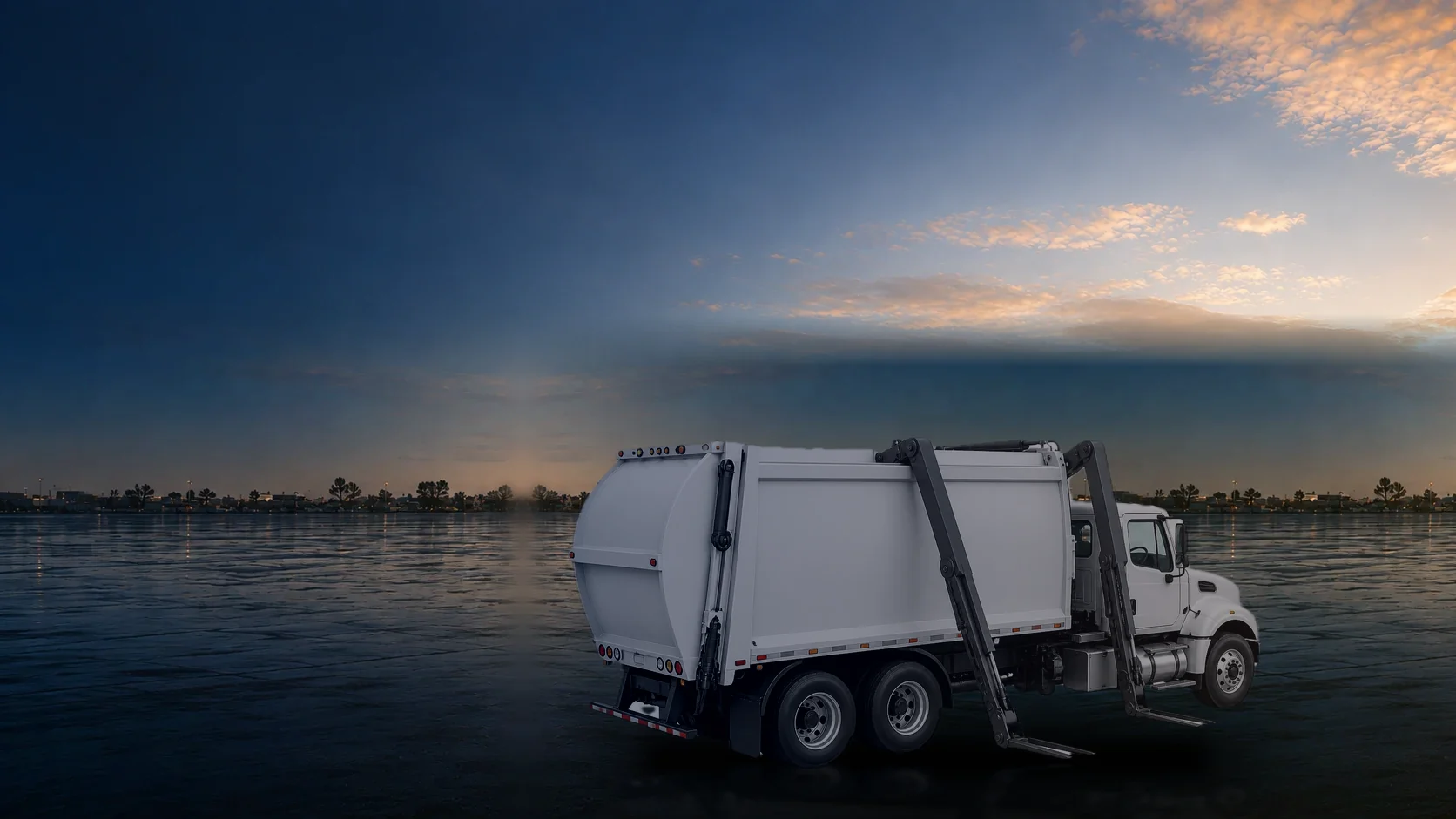
Illustrative image of a US conventional-cab front-loader garbage truck on a wet yard at dawn, curb side to camera. AI generated.

USA/Solutions/By vehicle/Garbage trucks

Garbage and recycling trucks

Garbage trucks. See the helper, the curb and every backup.

A residential route puts a 60,000-pound truck into alleys, cul-de-sacs and school zones several hundred times a day, with a helper on the step and traffic passing inches from the hopper. RECON gives U.S. waste haulers multi-camera coverage of the whole truck, camera health you can check before the route rolls, and video that settles what happened in minutes rather than weeks.

Predict the risk. Prevent the collision. Prove what happened.

Built for U.S. waste and recycling fleets: front loaders, rear loaders, automated side loaders, roll-offs and mixed residential and commercial routes.

  • 1 to 24 camerasper truck, configuration dependent
  • Live camera healthMANTIS Health checks every camera, every day
  • One subscriptionhardware, software and support, subject to eligibility

Camera count, 360° views, night vision and AI detections depend on configuration. Assistance supports driver judgment; it does not replace it or guarantee prevention. Hero image is illustrative and AI generated, pending fleet photography.

Why garbage trucks

Low mileage. High exposure.

A garbage truck covers fewer miles than a Class 8 tractor and meets more hazards per mile than almost anything else on the road. The risk is in the route, not the odometer.

01

Backing on every block.

Dead-end streets, alleys and commercial lots mean backing up several times an hour, often with a helper on foot behind the truck. Federal data puts transportation incidents at the top of the list of fatal events in waste collection, and backing incidents are the ones a camera system is most directly built to prevent.

02

A helper working at the hopper.

On a rear loader the helper rides the step, works inches from the packer and steps off into live traffic at every stop. On a front loader the driver is lifting a container over the cab with a forklift-sized blind spot underneath. Neither is visible from the mirrors alone.

03

Traffic passing at speed.

More than 30 states now have Slow Down to Get Around laws because drivers pass stopped collection trucks at full speed. Most incidents involve a third party, and most disputes come down to who saw what and whether anyone can show it.

Sources. U.S. Bureau of Labor Statistics, Census of Fatal Occupational Injuries, 2024 reference year, released February 19, 2026: refuse and recyclable material collectors recorded a fatal injury rate of 37.4 per 100,000 full-time equivalent workers against 3.3 across all occupations, the fifth-highest rate of any occupation, and transportation incidents accounted for 38.2 percent of all occupational fatalities. Slow Down to Get Around laws are in force in more than 30 states, including Texas Transportation Code §545.157. MANTIS RECON is a collision prevention and evidence system; it does not replace safe work practices, trained spotters or route design.

Camera coverage

One system around the whole truck.

A typical front-loader configuration puts cameras where a route actually goes wrong: ahead, down both sides, across the rear and the arms, and, if you choose, in the cab. Every feed records continuously and can be viewed live through the RECON platform, so a fleet manager at the yard sees what the driver sees.

  • Forward. Road ahead, following distance, intersection approaches and the car that pulls out in front of a stopping truck.
  • Curbside and street side. Cyclists, parked cars, mailbox and mirror strikes on residential streets that were never laid out for a 102-inch body.
  • Rear and hopper. Backing, the helper on the step and the packer zone, with the video kept for when a question is asked.
  • Arms and container. The lift cycle over the cab on a front loader, or the arm reach on an automated side loader, where the driver’s line of sight is worst.
  • In cab, optional. Driver-facing camera for distraction and fatigue detection, with privacy settings agreed with your drivers before it goes live.

Camera positions, counts and AI detections depend on the configuration selected for each truck type. Ask us about rear loaders, automated side loaders and roll-offs, which need a different layout.

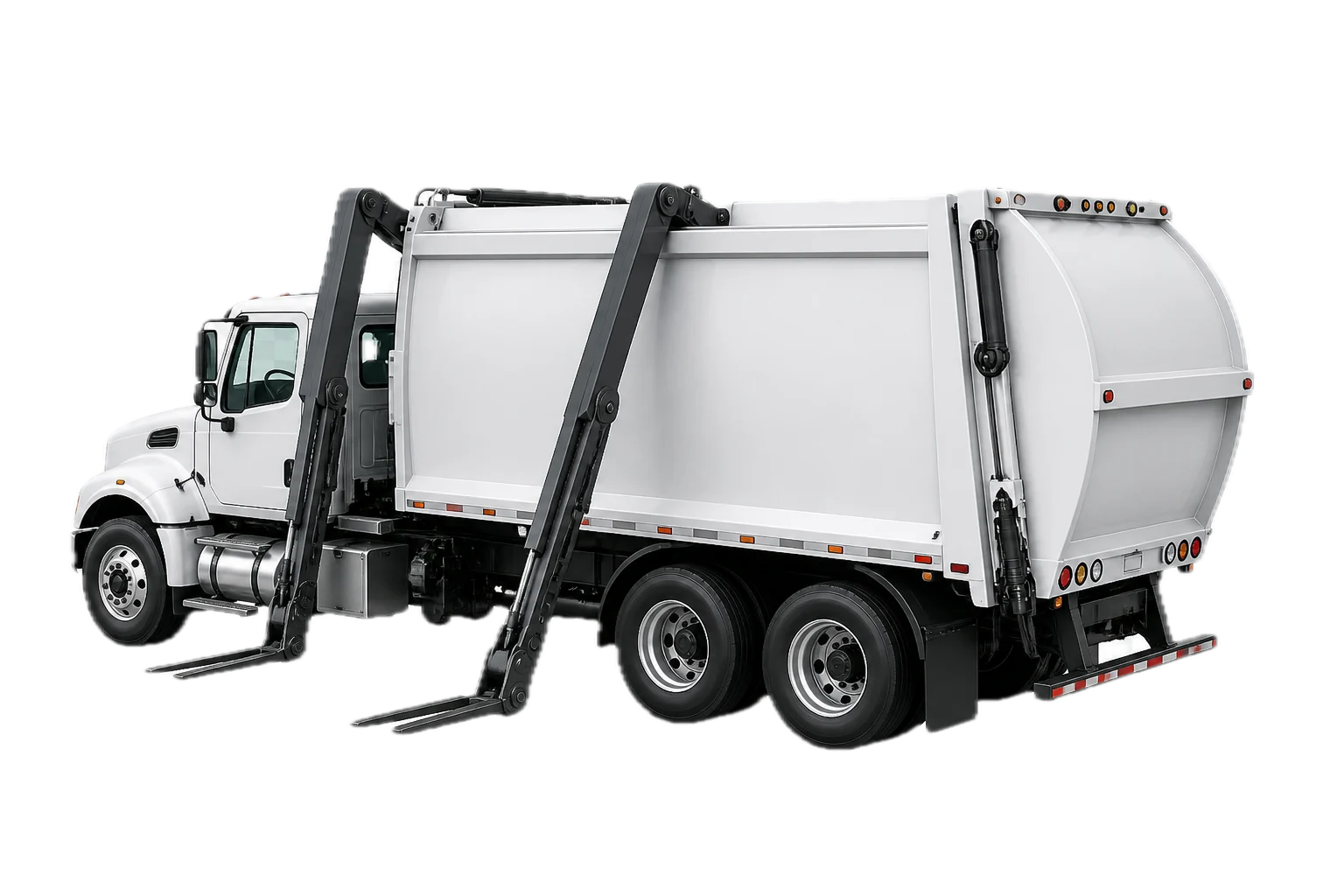
Illustrative image of a U.S. conventional-cab front-loader garbage truck, viewed from the driver side rear. AI generated.
Illustrative U.S. front-loader image, generated for this page rather than captured from a vehicle, with indicative camera positions. Final positions are agreed per truck type in the configurator.

RECON on the route

Predict the risk. Prevent the collision. Prove what happened.

The same three streams as the rest of the MANTIS platform, tuned to what a collection route throws at a driver and a fleet manager.

Predict

Collision Likelihood, weighted for the route.

Each truck and driver is scored against the fleet, weighted by the multipliers that matter on a collection route: backing frequency, time of day, weather and street density. Scores are relative comparisons that tell you where to look first. They are not a forecast that a collision will happen.

Prevent

Alerts that reach the driver in time.

In-cab alerts flag pedestrians and cyclists in the curbside zone, close following and distraction as they happen. Alerts support the driver’s judgment and the crew’s safe work practices. They do not replace either, and they do not guarantee prevention.

Prove

Every camera, one moment, minutes later.

When a homeowner claims a mailbox, a motorist claims a sideswipe or a helper is hurt, the Evidence Center pulls video from every camera around the moment with telemetry alongside. On Demand retrieval typically returns a clip in minutes, subject to power, connectivity and retention settings. The Claims Pack puts it in front of your insurer or defense counsel in one file.

Risk scores in RECON examples are shown out of 15 and use demo data. A hard brake may be defensive driving: review video, context and the driver’s account before drawing a conclusion, and never let a score alone decide an employment, underwriting or liability outcome. Video cannot establish injury severity. MANTIS does not guarantee premiums, settlements, admissibility or legal outcomes. Finding footage in seconds is not a guaranteed transfer speed; recording, power, connectivity, retention, clip length and quality all apply.

MANTIS Health

Know the rear camera works before the route rolls.

A backup camera that died overnight is found at the first dead end, with a helper on foot behind the truck and a route already running late. MANTIS Health monitors every camera, recorder and connection on every truck and reports faults to the yard before pre-trip, so the truck that goes out is the truck you think it is.

  • Live diagnostics for every camera, recorder and connection, fleet-wide, in one view.
  • Fault alerts naming the truck, the camera and the time, so the shop knows what to look at.
  • Replacement handled under your package terms, so a failed unit is a ticket, not a purchase order.

Offline is not proof of camera failure. Monitoring or power alone does not guarantee useful recording or retrievable footage. Whether a truck with a reported fault runs its route is a decision under your own safety program.

MANTIS RECONConcept · demo data

Fleet health, North Yard, 4:40 AM

18 trucks due out. One rear camera fault raised overnight.

Trucks ready17 / 18All cameras reporting
Cameras online89 / 90Checked 4:38 AM
Recorders18 / 18Recording
Open faults1Needs attention
Fault: Truck 07, REAR camera, no signal since 10:14 PM. Due out 5:10 AM.
Open shop ticket

Concept illustration of the MANTIS Health view using fictional demo data. Truck names, times and counts are not real fleet data.

Laws and standards

Built with Slow Down to Get Around and ANSI Z245.1 in mind.

Waste fleets answer to more than the FMCSA. RECON is designed to sit inside the frameworks you already work to, not to replace them.

Slow Down to Get Around

The law is on the crew’s side. The video proves it.

More than 30 states require motorists to slow down or change lanes when passing a stopped waste or recycling collection vehicle. In Texas, Transportation Code §545.157 requires drivers to slow to 20 mph or move over. Enforcement depends on evidence, and a helper’s account rarely carries the day on its own.

Curbside and rear cameras capture the passing vehicle, its speed relative to the truck and the moment the helper stepped off. That footage supports a police report, an insurance claim and a conversation with a repeat offender’s employer.

Requirements vary by state and change over time. Check the current statute where your routes run. Video is evidence for others to weigh; MANTIS does not determine fault or guarantee any enforcement or legal outcome.

ANSI Z245.1 and OSHA

Supplementary to safe work practices, never a substitute.

ANSI Z245.1-2017 is the U.S. safety standard for mobile waste and recyclable material collection equipment, and OSHA’s general duty and vehicle rules sit behind it. Both treat backing as a task to be controlled with procedure and training first. RECON is built to respect that: better visibility for the driver, faster answers for the fleet manager, and camera health you can evidence to an inspector or an insurer.

Where your program asks for backing to be designed out, RECON’s route and event data shows you which streets and which times are driving the backing count.

Cameras and sensors do not remove the need for a hazard assessment, trained spotters or route design. MANTIS does not certify compliance with ANSI Z245.1 or any OSHA requirement.

Hardware, software and support

One package. Hardware, software and support.

No capital purchase, no separate data plan, no argument about who owns a failed camera. Available direct from MANTIS or through your telematics provider or reseller in the United States.

Support

Installation and support, agreed up front.

Installation, fault handling and replacement are agreed with your team as part of the package terms, so a failed unit has an owner and a process before it happens.

Connectivity

Multi-network connectivity, data included.

RECON connects across supported U.S. carriers and uncapped data is included in the subscription, so a transfer station at the edge of coverage is not a reason to lose video. Uncapped data is subject to fair use policy. Network coverage, roaming, plan availability and retrieval performance vary by region and configuration.

Direct or through your provider

Buy it the way that suits your fleet.

Buy RECON direct from MANTIS, or through the telematics provider or reseller you already work with. Either way RECON integrates with the platform your fleet runs, so the route data and the video sit together. Tell us which platform you run and we will point you to the right route.

Questions from waste haulers

The questions we get asked on the yard.

If yours is not here, put it in the form and a solutions engineer will answer it directly.

How many cameras does a garbage truck need?

Most front loaders and rear loaders run four to six: forward, curbside, street side, the rear or hopper area and, optionally, in cab. Automated side loaders and roll-offs need a different layout, and some haulers add a camera on a blind spot their crews have identified. Configuration is agreed per truck type; RECON supports 1 to 24 cameras.

Does RECON replace a spotter when backing?

No. Your backing procedure, including a trained spotter where your hazard assessment calls for one, stays in charge. RECON adds visibility for the driver, health monitoring for the manager and evidence for everyone.

What happens when a camera fails mid-route?

MANTIS Health raises the fault naming the truck, the camera and the time. Whether the truck finishes the route is your call under your safety program. Repair or replacement of the unit follows your package terms, with installation quoted separately, and an offline camera is not by itself proof that the unit has failed.

How quickly can we get video after a complaint?

On Demand retrieval typically returns a clip in minutes when the truck is powered and connected, and retention of three to four months is available depending on configuration. None of that is a guarantee: power, connectivity, retention settings, clip length and quality all apply, which is why the health view matters.

Will drivers accept a driver-facing camera?

Driver-facing cameras are optional. Where fleets use them, privacy settings, retention and who can view video are agreed with drivers before the system goes live. In our experience the Positive Risk Score, which recognizes good driving as well as flagging risk, does more for acceptance than any policy document.

Can we buy RECON through our existing telematics provider?

Yes, or direct from MANTIS. In the US you can buy through the telematics provider or reseller you already work with, or from MANTIS itself. Tell us which platform you use and we will point you to the right route.

Get a fleet risk assessment

See RECON on a garbage truck like yours.

Tell us about the fleet: truck types, routes, yards and the states you operate in. We will build the assessment around your configuration and the telematics platform you already run.

  • A 30-minute walk-through of the platform on a front-loader configuration.
  • A camera layout proposal for each truck type in your fleet.
  • A subscription quote, direct or through your telematics provider or reseller.
Helps us route you to the right partner.

Choose which cookies this site may set. Necessary cookies are always on. Read the cookie policy.