Forward right, A-pillarCurb side, below the window lineRECON curb-side camera
Motorcoaches
Fleet cameras for motorcoaches
Fifty passengers. Fifty claims.
When a coach is blamed for a collision it is not one claim. It is every seat on the bus, each with a name, an attorney and a medical bill, plus the other vehicle. RECON puts a camera on every side the driver cannot see, tells you when one has stopped working, and gets you the footage before the first letter arrives.
MANTIS, Austin, Texas. Sold through telematics providers and resellers, and direct from MANTIS in the US.
Shaded areas are illustrative blind-spot regions, not measured sightlines for a specific coach. Camera coverage depends on configuration.
1
collision
50+
potential claimants
$36M
median nuclear verdict
A 45-foot coach seats around 50. Every seat can claim; not every seat will. $36 million is the median US verdict above $10 million in 2022, from ATRI, Trucking Litigation: A Forensic Analysis, December 2025. MANTIS does not guarantee any claim outcome.
Where a coach gets into trouble
A 45-foot body, no rear window, and fifty people behind the driver
The US runs 49,543 motorcoaches and 87 percent of operators have fewer than 25 (ABA Foundation 2025 Motorcoach Census, Tourism Economics, US and Canada). FMCSA counted 14 intercity buses in fatal crashes in 2022 against 87 school buses (Large Truck and Bus Crash Facts 2022). The everyday exposure is different: low speed, tight space, and fifty people close to a very long vehicle.
01
Tail swing at the curb
A 45-foot coach turning right swings its rear out over the lane it is leaving. The bollard, the parked SUV and the person on the curb are behind the driver’s mirror. A camera on the street side is the only thing that saw it.
02
The door side at the stop
Hotels, rest areas, stadium lots. Luggage bays open, passengers crossing in front of the bumper, a tow truck wanting the same space. The lowest speeds of the trip and the highest number of people within six feet of the coach.
03
Inside the aisle
A car cuts in and the driver brakes hard. A passenger who was reaching into the overhead bin goes down. The injury claim arrives six weeks later and names your company, not the car. Interior footage shows what the driver was reacting to and who was out of their seat.
04
Three days from base
The charter leaves Tuesday and comes back Friday. If the rear camera stopped recording on Monday night, nobody finds out until the claim letter. MANTIS Health is built for exactly this: the coach tells you before it leaves the yard.
MANTIS Health
Cameras only protect you if they are working
Every camera system in the market is sold on the footage. Almost none of them tell you when a camera has stopped recording. MANTIS Health checks each camera and its recording on the coach and reports the ones that need attention, so the person planning tomorrow’s charters can see it today.
Offline is not proof of camera failure, and a healthy report is not a guarantee that footage will be there when you need it. Monitoring tells you what to check; it does not replace checking.
Departure 7:30 AM. Check rear camera connector before release.
Camera names, times and vehicle are fictional. Health states are shown with text as well as color.
Parked
The coach is parked. The risk is not.
A hotel lot at 2 AM. Luggage bays, an unattended door, forty windows of glass. A coach attracts damage a truck never sees, and the driver finds it at 6 with a full manifest waiting. RECON shows you who was there.
Luggage bays
Opened, emptied, closed again. The door camera and curb-side camera see who.
Glass, both sides
Forty windows is forty targets. Street-side and curb-side cameras cover the length of the coach.
Struck while parked
The vehicle that clipped the rear at 3 AM and left. The rear camera is the only witness.
Recording with the engine off depends on the power configuration you choose and on retention settings. Ask us what your configuration records overnight before you rely on it.
Camera coverage on a coach
Six angles on a 45-foot vehicle
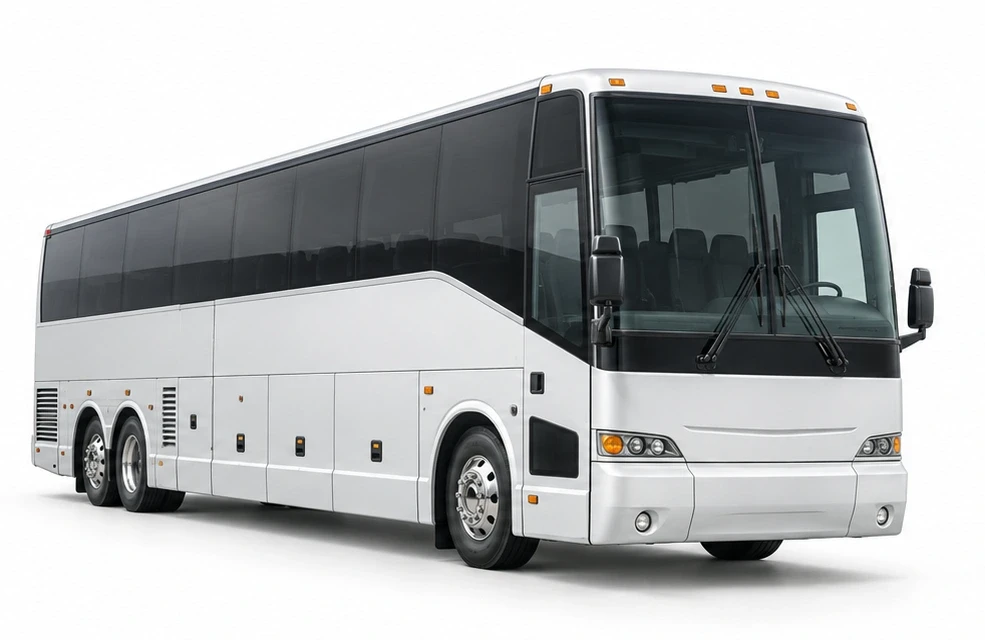
Forward, curb side, street side, rear, door and interior. Each one covers a moment the driver’s mirror cannot.
A typical RECON motorcoach configuration runs four to eight cameras: forward-facing, curb side and street side along the body, rear, the door, and an interior view of the aisle. The street-side camera covers the tail swing. The door camera covers the boarding step and the luggage bays. The interior camera covers the moment a passenger claims they were thrown from their seat.
Which cameras, how many, and which AI detections run depend on the configuration you choose. Interior cameras are your decision: passenger signage, retention and who can view the footage are set by the operator, and they are worth writing down before the first install.
FrontFollowing distance, the car that cut in, the light that was green
Curb sideBoarding, the step, luggage bays, pedestrians at the stop
Street sideTail swing, lane changes, the cyclist alongside
RearBacking at the depot, the vehicle that ran into the back
DoorWho boarded, when the door closed, the step at night
InteriorThe aisle when the brakes went on, who was standing
Camera count, 360 degree views, night vision and AI detections depend on configuration. Assistance supports driver judgment; it does not replace it or guarantee prevention.
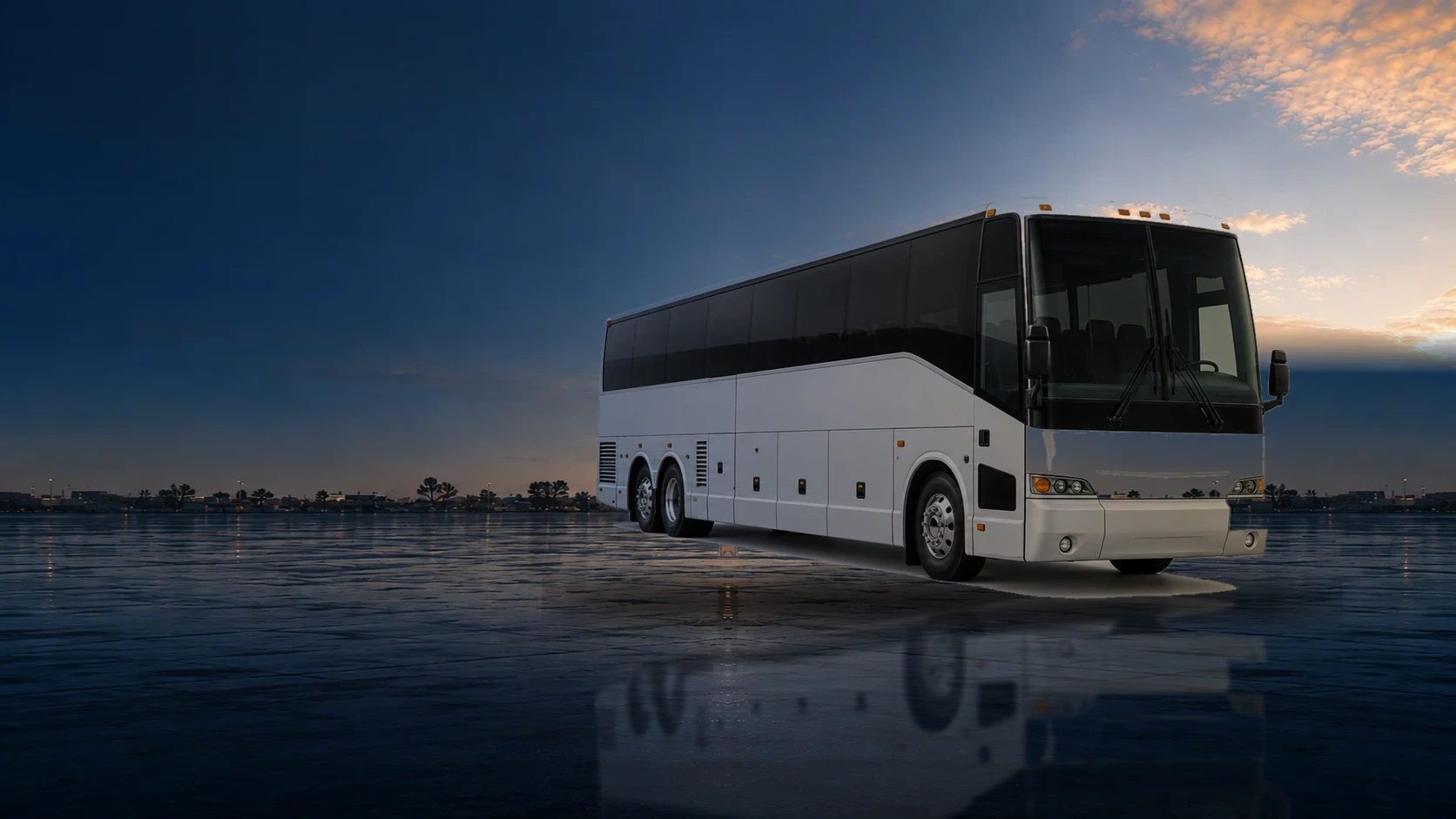
Illustrative image, generated for this page rather than captured from a vehicle. Camera positions are shown in the list; final positions depend on the vehicle and configuration.
Prove what happened
The coach is in Nashville. The claim is in your inbox.
You pull the clip from the Evidence Center without waiting for the coach to come home.
RECON On Demand lets you request footage by vehicle, camera and time, review every angle with the telemetry underneath, and send a Claims Pack to your insurer or attorney with the driver’s account alongside it.
1
Request
Vehicle, camera, date and time. From your desk, while the coach is on the road.
2
Review
Every angle side by side, with speed and braking data under the video.
3
Send
A Claims Pack your insurer, broker or attorney can review, with the angles, the data and the driver’s account together.
What is available depends on recording, power, connectivity, retention settings and clip length. Retention of three to four months is possible on some configurations and is not universal. A Claims Pack helps the people deciding a claim see what happened; it does not guarantee a settlement, a premium, or how a court will treat the footage.
Regulation, plainly
What applies to a US motorcoach, and what RECON does about it
RECON is not a compliance product. These are the rules an operator lives with, and where the footage and the camera health data fit alongside them.
Rule
What it requires
Where RECON fits
FMCSA hours of service, passenger-carrying drivers
10 hours driving after 8 consecutive hours off duty. No driving after 15 hours on duty. No driving after 60 hours on duty in 7 days or 70 in 8.
RECON does not replace your ELD. Camera evidence shows what was happening on the road at the point a fatigue question is raised.
NHTSA FMVSS 208, seat belts
Lap and shoulder belts required at every passenger seat on new over-the-road buses built from November 2016. Older coaches were not required to retrofit.
Interior footage shows whether a passenger was seated and belted when the coach braked, which is usually the first question in an injury claim.
FMCSA safety record, public
A passenger carrier’s inspection and crash history is public on FMCSA systems, and charter customers can look it up before they book.
Footage and telemetry give you something to say about an event beyond the citation. MANTIS does not determine fault or compliance.
Sources: FMCSA Summary of Hours of Service Regulations; NHTSA final rule on occupant crash protection, November 2013; FMCSA Large Truck and Bus Crash Facts 2022. Requirements vary by state and operation. Confirm your obligations with your own compliance advisor.
Prevent
Prevention means the driver gets home too
A coach driver spends the day with 50 people behind them and a mirror that does not show the tail. In-cab prompts on the configurations that support them flag following distance and distraction as they happen, and the street-side and rear cameras give the driver an angle they have never had.
Each driver has a Positive Risk Score out of 15 built from context, not from a count of harsh events. A hard brake for a car cutting in is defensive driving and the footage shows it. Scores are for coaching conversations, with the footage and the driver’s account in the room. They do not decide employment, insurance or liability on their own.
Example scores on this page are fictional demo data. Which detections and prompts run depends on the configuration you choose.
Concept illustration. Fictional demo data.
Positive Risk Score
Driver 41, last 30 days
12out of 15
Following distanceSteady
Hard braking2 events, both with a vehicle cutting in
Scores compare context, not raw event counts. Fictional driver and values.
Hardware, software and support
One package. Hardware, software and support.
Hardware and software together
Cameras, recorder, RECON platform and updates in one monthly subscription per coach. No capital purchase, no separate software license.
Unrestricted connectivity
Multi-network connectivity with uncapped data is included. The coach connects on whichever supported network is available where it is, from the Texas hill country to a Pennsylvania rest area.
Through your telematics provider, or direct
You can buy RECON through the telematics provider or reseller you already work with, and MANTIS also sells direct in the US. RECON integrates with the platform your fleet runs, so the video sits beside the data you already have.
Repair and replacement follow the terms agreed for your package. Installation is quoted separately.
Uncapped data is subject to fair use policy. Network coverage, roaming, plan availability and retrieval performance vary by region and configuration.
Questions from coach operators
What operators ask before the first install
How many cameras does a motorcoach need?
Most coach configurations run between four and eight cameras. Forward, rear, curb side and street side cover the outside of the vehicle. A door camera and an interior camera cover boarding and the aisle. Which of these you fit, and which AI detections run, depends on the configuration you choose. We will walk the vehicle with you before recommending one.
Can we put cameras inside the coach without upsetting passengers?
Yes, and many operators do. Interior cameras are your decision. You set the signage, the retention period and who can view footage. Audio recording rules differ by state, so write the policy down, make sure drivers and booking staff can point to it, and confirm the position in the states you operate in with your own advisor.
How quickly can we get footage after an incident on a charter?
You request it from the Evidence Center by vehicle, camera and time, and the clip transfers over the coach’s connection while it is still on the road. How long that takes depends on where the coach is, which network is available, clip length and recording settings. MANTIS does not promise a fixed retrieval time.
What happens when a camera fails?
MANTIS Health reports it, usually before anyone on the coach notices. Repair or replacement follows the terms agreed for your package, and installation is quoted separately.
Does RECON replace our ELD or telematics?
No. RECON is the camera and evidence layer. It integrates with the telematics platform you already run, so hours of service, location and vehicle data stay where they are and the video sits alongside. It can also run as a standalone camera platform. Tell us which platform you use and we will confirm what is supported.
How do we buy it?
Through the telematics provider or reseller you already work with, or direct from MANTIS in the US, on a monthly subscription per coach that covers hardware, software and support, subject to eligibility. Tell us which platform you run and we will point you to the right route. Start with a fleet risk assessment and we will scope the configuration with you.
Get a fleet risk assessment
Tell us about the coaches
A 30-minute conversation about where your coaches operate, what your cameras do today, and what a claim currently costs you in time. No slide deck. We will come back with a configuration and a monthly figure per coach.
US office
MANTIS, Austin, Texas
How to buy
Through your telematics provider or reseller, or direct from MANTIS in the US
Buses & motorcoaches. A view built around the job. | MANTIS