FLEET RISK INTELLIGENCE · SINCE 2018
Password-protected reviewUSA/UK & IrelandBecome a Partner ↗
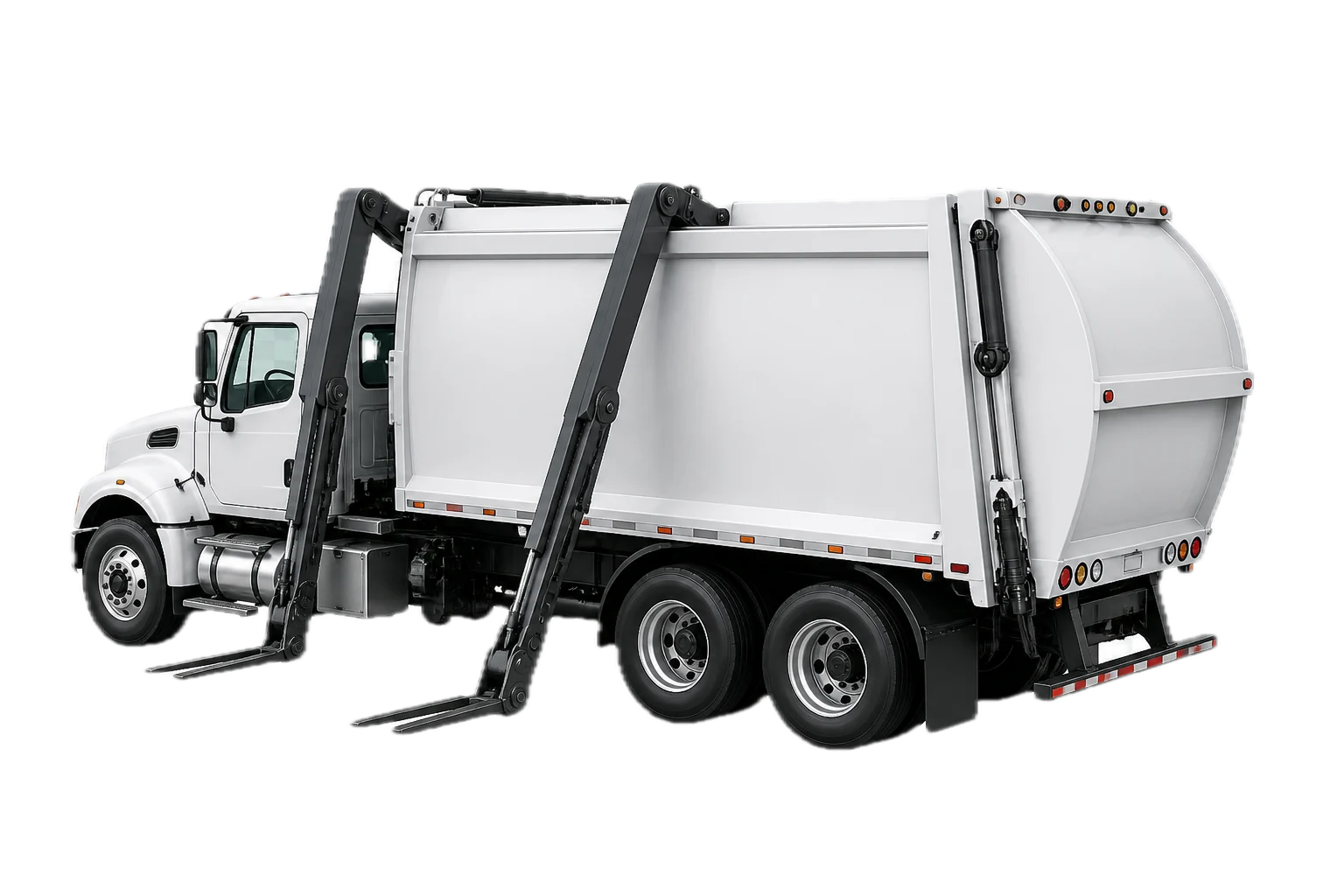
Illustrative image of a refuse collection vehicle on a wet yard at dawn. AI generated, showing a US-style front loader.

UK & Ireland/Solutions/By vehicle/Refuse vehicles

Refuse and recycling vehicles

Refuse vehicles. See the loader, the kerb and every reverse.

A collection round puts a 26-tonne vehicle into terraced streets, cul-de-sacs and school runs several hundred times a shift, with a loader on the step and traffic passing inches from the hopper. RECON gives UK and Ireland waste operators multi-camera coverage of the whole vehicle, camera health you can check before the round rolls, and video that settles what happened in minutes rather than weeks.

Predict the risk. Prevent the collision. Prove what happened.

Built for UK and Ireland waste and recycling fleets: rear-loading RCVs, narrow-access vehicles, skip and hook-loaders, street sweepers and mixed domestic and commercial rounds.

  • 1 to 24 camerasper vehicle, configuration dependent
  • Live camera healthMANTIS Health checks every camera, every day
  • One subscriptionhardware, software and a five-year warranty, subject to eligibility

Camera count, 360° views, night vision and AI detections depend on configuration. Assistance supports driver judgement; it does not replace it or guarantee prevention. Hero image is illustrative and AI generated, and shows a US-style front loader rather than a UK rear-loading RCV.


Why refuse vehicles

Low mileage. High exposure.

A refuse vehicle covers fewer miles than an articulated HGV and meets more hazards per mile than almost anything else on the road. The risk is in the round, not the odometer.

01

Reversing on every round.

Cul-de-sacs, back lanes and commercial yards mean reversing several times an hour, often with a loader on foot behind the vehicle. HSE guidance puts eliminating or reducing reversing first, and reversing incidents are the ones a camera system is most directly built to prevent.

02

A loader working at the hopper.

On a rear loader the crew walk alongside, work inches from the lifting gear and step off into live traffic at every stop. The driver’s view down the nearside and across the rear is limited to what the mirrors can show.

03

Traffic passing at speed.

A stopped refuse vehicle is passed all day by drivers who are running late. Most incidents involve a third party, and most disputes come down to who saw what and whether anyone can show it.

Sources. HSE provisional figures for 2025/26, published 2 July 2026: the waste and recycling sector recorded six worker deaths and a fatal injury rate of 5.47 per 100,000 workers, second only to agriculture, forestry and fishing and around ten times the average across all industries. HSE guidance on transport in waste and recycling asks operators to eliminate or reduce reversing wherever possible, to use reversing aids such as mirrors, CCTV, detectors and alarms, and to use trained reversing assistants only where the risk cannot be controlled another way. MANTIS RECON is a collision prevention and evidence system; it does not replace safe systems of work, trained reversing assistants or round design.

Camera coverage

One system around the whole vehicle.

A typical rear-loader configuration puts cameras where a round actually goes wrong: ahead, down both sides, across the rear and the lifting gear, and, if you choose, in the cab. Every feed records continuously and can be viewed live through the RECON platform, so a supervisor at the depot sees what the driver sees.

  • Forward. Road ahead, following distance, junction approaches and the car that pulls out in front of a stopping vehicle.
  • Nearside and offside. Cyclists on the inside, parked cars, wall and mirror strikes on streets that were never laid out for a refuse vehicle.
  • Rear and hopper. Reversing, the loader at the bin lift and the compaction zone, with the video kept for when a question is asked.
  • Lifting gear. The bin lift and the tailgate on a rear loader, or the arm on a side loader, where the driver’s line of sight is worst.
  • In cab, optional. Driver-facing camera for distraction and fatigue detection, with privacy settings agreed with your drivers and their representatives before it goes live.

Camera positions, counts and AI detections depend on the configuration selected for each vehicle type. Ask us about narrow-access vehicles, skip and hook-loaders and street sweepers, which need a different layout.

Illustrative image of a refuse collection vehicle, viewed from the nearside rear. AI generated, showing a US-style front loader.
Illustrative image, generated for this page rather than captured from a vehicle, showing a US-style front loader with indicative camera positions. Final positions are agreed per vehicle type in the configurator.

RECON on the round

Predict the risk. Prevent the collision. Prove what happened.

The same three streams as the rest of the MANTIS platform, tuned to what a collection round throws at a driver and a supervisor.

Predict

Collision Likelihood, weighted for the round.

Each vehicle and driver is scored against the fleet, weighted by the multipliers that matter on a collection round: reversing frequency, time of day, weather and street density. Scores are relative comparisons that tell you where to look first. They are not a forecast that a collision will happen.

Prevent

Alerts that reach the driver in time.

In-cab alerts flag pedestrians and cyclists in the nearside zone, close following and distraction as they happen. Alerts support the driver’s judgement and the crew’s safe systems of work. They do not replace either, and they do not guarantee prevention.

Prove

Every camera, one moment, minutes later.

When a resident claims a damaged wall, a motorist claims a sideswipe or a loader is hurt, the Evidence Centre pulls video from every camera around the moment with telemetry alongside. On Demand retrieval typically returns a clip in minutes, subject to power, connectivity and retention settings. The Claims Pack puts it in front of your insurer or legal adviser in one file.

Risk scores in RECON examples are shown out of 15 and use demo data. A harsh brake may be defensive driving: review video, context and the driver’s account before drawing a conclusion, and never let a score alone decide an employment, underwriting or liability outcome. Video cannot establish injury severity. MANTIS does not guarantee premiums, settlements, admissibility or legal outcomes. Finding footage in seconds is not a guaranteed transfer speed; recording, power, connectivity, retention, clip length and quality all apply.

MANTIS Health

Know the rear camera works before the round rolls.

A reversing camera that died overnight is found at the first dead end, with a loader on foot behind the vehicle and a round already running late. MANTIS Health monitors every camera, recorder and connection on every vehicle and reports faults to the depot before the walkaround, so the vehicle that goes out is the vehicle you think it is.

  • Live diagnostics for every camera, recorder and connection, fleet-wide, in one view.
  • Fault alerts naming the vehicle, the camera and the time, so the workshop knows what to look at.
  • Warranty replacement handled inside the MANTIS as a Service subscription, so a failed unit is a ticket, not a purchase order.

Offline is not proof of camera failure. Monitoring or power alone does not guarantee useful recording or retrievable footage. Whether a vehicle with a reported fault runs its round is a decision under your own safety policy.

MANTIS RECONConcept · demo data

Fleet health, North Depot, 05:40

18 vehicles due out. One rear camera fault raised overnight.

Vehicles ready17 / 18All cameras reporting
Cameras online89 / 90Checked 05:38
Recorders18 / 18Recording
Open faults1Needs attention
Fault: Vehicle 07, REAR camera, no signal since 22:14. Due out 06:10.
Open workshop ticket

Concept illustration of the MANTIS Health view using fictional demo data. Vehicle names, times and counts are not real fleet data.

Rules and standards

Built with the Direct Vision Standard and HSE guidance in mind.

Waste operators answer to more than the traffic commissioner. RECON is designed to sit inside the frameworks you already work to, not to replace them.

Direct Vision Standard

Over 12 tonnes into London needs a permit.

Since 28 October 2024, an HGV over 12 tonnes gross vehicle weight entering Greater London needs a safety permit, and a vehicle rated zero to two stars needs the Progressive Safe System to get one. That asks for a nearside camera monitoring system, blind spot information, a moving off information system, side under-run protection where practicable, an audible warning on turns and external warning signage.

A 26-tonne refuse vehicle sits well over the threshold, and the scheme runs 24 hours a day.

The Direct Vision Standard is a Transport for London scheme covering Greater London. Star ratings, permit conditions and penalties are set by TfL and change over time, so check your vehicle’s rating and the current rules before relying on them. MANTIS supplies camera and detection equipment; it does not issue permits or certify compliance.

HSE guidance on reversing

Designed out first. Evidenced second.

HSE guidance on transport in waste and recycling puts eliminating or reducing reversing first, then safe systems of work, then reversing aids such as mirrors, CCTV, detectors and alarms, with trained reversing assistants only where the risk cannot be controlled another way. RECON is built to respect that order: better visibility for the driver, faster answers for the supervisor, and camera health you can evidence to an inspector or an insurer.

Where your policy asks for reversing to be designed out, the round and event data shows which streets and which times are driving the reversing count.

Cameras and sensors do not remove the need for a risk assessment, trained reversing assistants or round design. MANTIS does not certify compliance with any HSE or WISH guidance.

MANTIS as a Service

One subscription. Hardware, software and a five-year warranty.

No capital purchase, no separate data plan, no argument about who owns a failed camera. Available through MANTIS telematics partners in the UK and Ireland.

Warranty

Five years, inside the subscription.

Manufacturer warranty replacement is free of charge subject to a paid RECON subscription and applicable warranty terms; installation is excluded. Confirm five-year coverage for your selected MANTIS as a Service package.

Connectivity

Multi-network connectivity, data included.

RECON connects across supported networks and uncapped data is included in the subscription, so a transfer station or landfill at the edge of coverage is not a reason to lose video. Uncapped data is subject to fair use policy. Network coverage, roaming, plan availability and retrieval performance vary by region and configuration.

Through your telematics provider

Sold through the platform you already use.

MANTIS sells only through telematics service providers and their reseller networks. RECON integrates with Webfleet and Geotab, so the round data your provider already holds and the video sit together, and there is one relationship to manage rather than two.

Questions from waste operators

The questions we get asked in the depot.

If yours is not here, put it in the form and a solutions engineer will answer it directly.

How many cameras does a refuse vehicle need?

Most rear loaders run four to six: forward, nearside, offside, the rear or hopper area and, optionally, in cab. Narrow-access vehicles, skip and hook-loaders and street sweepers need a different layout, and some operators add a camera on a blind spot their crews have identified. Configuration is agreed per vehicle type; RECON supports 1 to 24 cameras.

Does RECON replace a reversing assistant?

No. Your reversing procedure, including a trained reversing assistant where your risk assessment calls for one, stays in charge. RECON adds visibility for the driver, health monitoring for the supervisor and evidence for everyone.

Does this help with the Direct Vision Standard?

The Progressive Safe System asks for specific equipment, including a nearside camera monitoring system, blind spot information and a moving off information system. RECON configurations can include that equipment, and MANTIS will tell you which parts of a permit application your configuration does and does not address. TfL issues the permit, not MANTIS.

What happens when a camera fails mid-round?

MANTIS Health raises the fault naming the vehicle, the camera and the time. Whether the vehicle finishes the round is your call under your safety policy. Warranty replacement of the unit is covered by the subscription, with installation excluded, and an offline camera is not by itself proof that the unit has failed.

How quickly can we get footage after a complaint?

On Demand retrieval typically returns a clip in minutes when the vehicle is powered and connected, and retention of three to four months is available depending on configuration. None of that is a guarantee: power, connectivity, retention settings, clip length and quality all apply, which is why the health view matters.

Will drivers accept a driver-facing camera?

Driver-facing cameras are optional. Where operators use them, privacy settings, retention and who can view video are agreed with drivers and their representatives before the system goes live. In our experience the Positive Risk Score, which recognises good driving as well as flagging risk, does more for acceptance than any policy document.

Get a fleet risk assessment

See RECON on a refuse vehicle like yours.

Tell us about the fleet: vehicle types, rounds, depots and the authorities you collect for. We will build the assessment around your configuration and the telematics platform you already run.

  • A 30-minute walk-through of the platform on a rear-loader configuration.
  • A camera layout proposal for each vehicle type in your fleet.
  • A MANTIS as a Service quote through your telematics partner.
Helps us route you to the right partner.

Choose which cookies this site may set. Necessary cookies are always on. Read the cookie policy.