
Where to begin with AI
Artificial intelligence is the biggest talking point in the industry and, for most fleets, still a solution looking for a problem.
Our Product Lead, Stephen Bloomer, spoke on a panel at Big Data Belfast 2025 called “Where to Begin with AI – Setting Out an AI Strategy”. Afterwards he put it in fleet terms:
"The question 'Where to begin with AI?' is one I hear a lot. For fleet managers, the answer isn’t in the futuristic hype; it’s in solving your biggest problems today: your soaring insurance premiums, your preventable incidents, and your mountain of administrative data. Whether you have no cameras at all or a system that just drowns you in videos, your starting point is the same: you need to move from raw data to intelligence. An effective AI strategy isn’t about replacing your team; it’s about augmenting them. It’s about giving them the one piece of critical information they need to prevent an incident or win a claim, freeing them from the 99% of data that’s just noise."
Two starting points
With no cameras, the first job is not analysis. It is having anything to analyze.
With cameras already fitted, the problem is the opposite. You have footage, you have alerts, you have no time, and the alerts you do read are mostly not the ones that mattered. The job there is filtering.
What RECON does with it
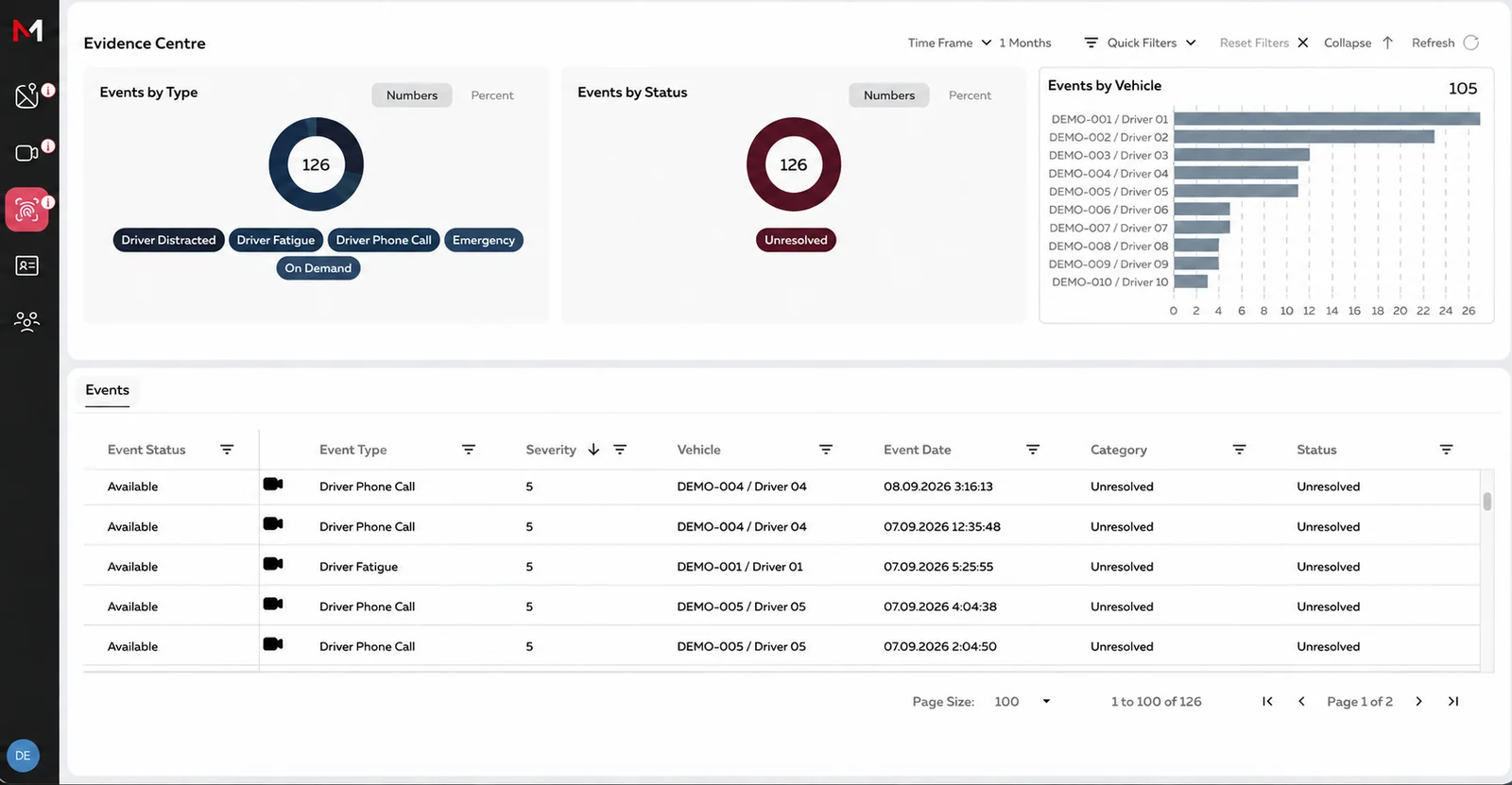
RECON reads driver events as they happen: fatigue, phone use, distraction. It then ranks them, so what reaches a manager is a short list of moments worth watching rather than a day of footage.
The ranking is the product. Detection on its own makes more work, not less.
When an incident does happen
For a qualifying collision, Collision Insights assembles what exists around the moment into one report: footage from the relevant cameras, impact and G-force data, speed and braking, and location.
It goes to you and your insurer while the incident is fresh. An insurer deciding liability in the first week is working from evidence. An insurer deciding in the third month is working from whatever the other side has said since.
What it does not do
It does not replace the person, and it does not decide whether a driver was at fault. A harsh brake can be good driving. A score is a prompt to look at the footage, not a verdict on someone.
Get in touch to talk through how this would work on your fleet.