
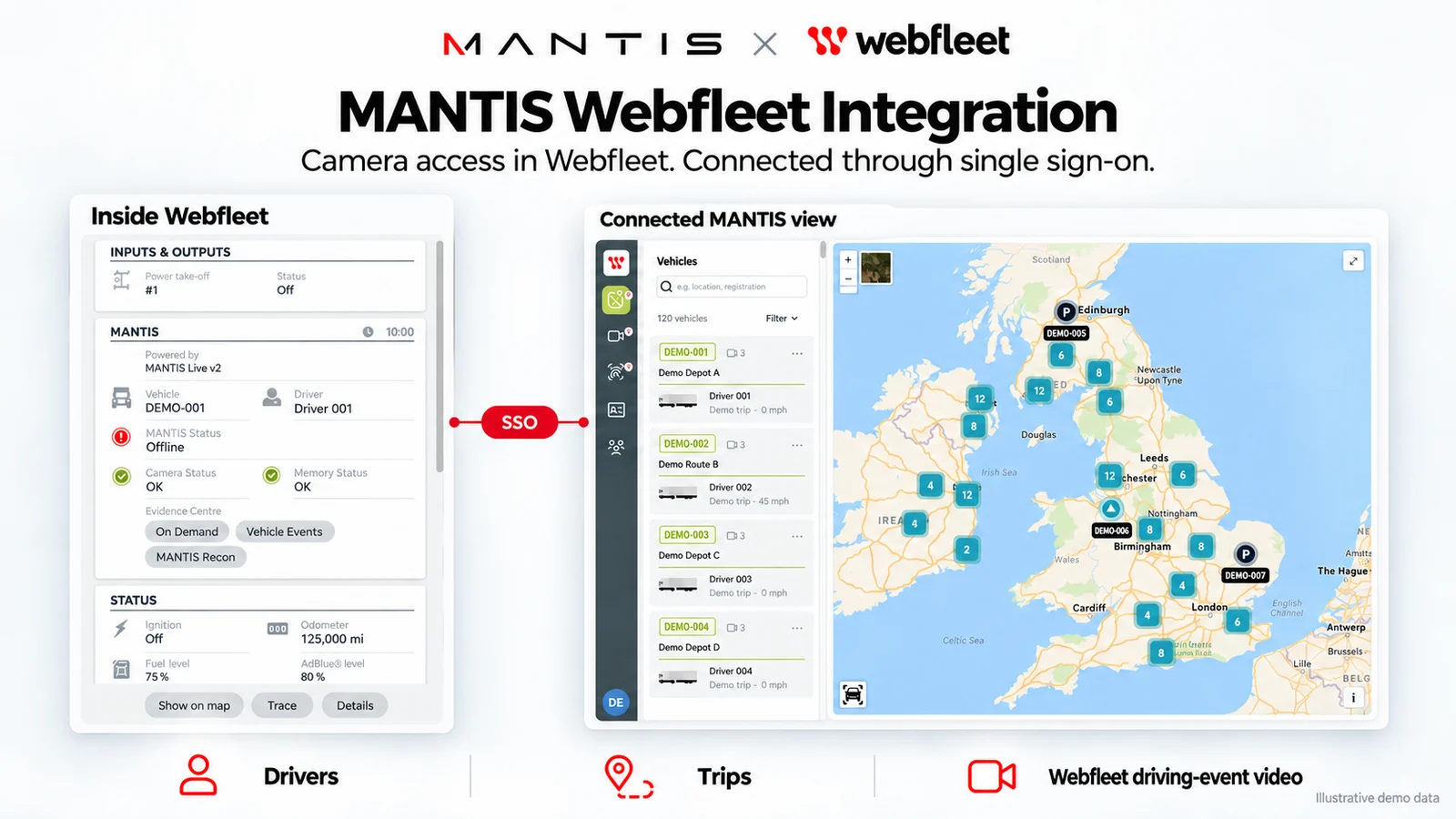
A camera that records everything and tells you nothing is a filing cabinet. You still have to open it, and you have to know which drawer.
Linking cameras to a telematics platform is what turns footage into something you can find. Four things it changes.
You find out when a camera stops working
The important one. Is it powered? Is it recording? Has anything been lost?
A linked platform reports camera status continuously, alerts you on a fault and, on most platforms, lets you view live. Without it, the answer to “are the cameras working” is “probably”, and you confirm it on the day you need footage, which is the worst possible day to find out.
Driver events get a name and a time against them
AI image analysis reads what is happening in the cab: phone use, fatigue, absence, smoking. You choose which of those you want to hear about.
The part that makes it usable is the association. The platform logs who was driving, when, and ties the alert and the footage to that trip. Without it you have a clip and no context.
Alerts get a severity
Not everything needs a response today. A platform that scores events lets you deal with the collision before the harsh brake, rather than working through a list in the order it arrived.
GPS still works when the camera does not
If a camera fails, the vehicle is still tracked. You can still reconstruct a route, the stops and the timings.
That matters for investigation. Given a place and a time, you can ask which of your vehicles was there, then pull whatever footage, events and alerts exist around it. Starting from the location rather than the vehicle is often the only way in.
What to ask a supplier
Whether the camera and the platform are genuinely linked or merely sold together. The difference shows up the first time you try to find a clip from three weeks ago and have only a rough idea of when it happened.