
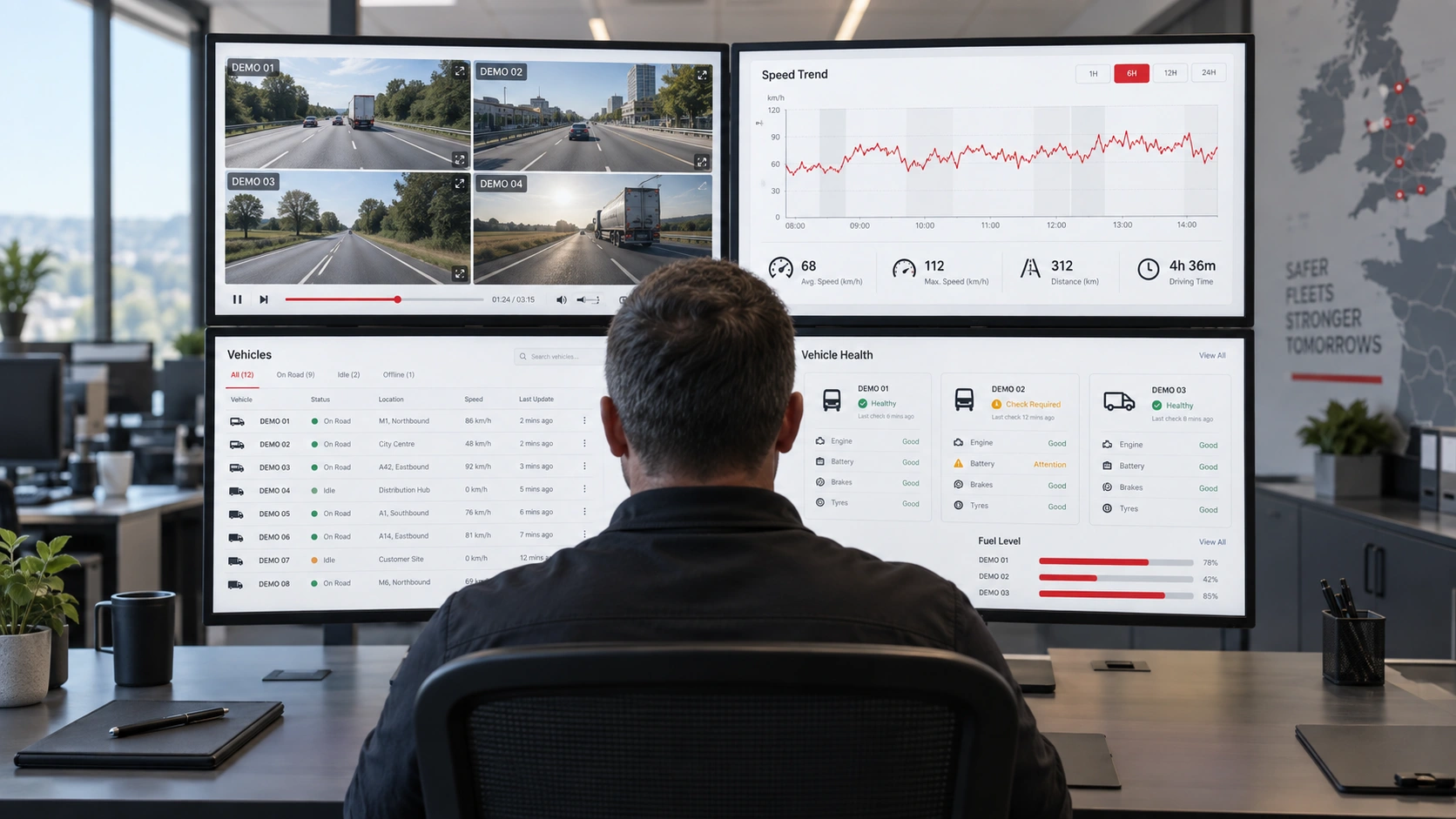
Most camera systems record. A smaller number tell you something. The gap between those two is where fleets lose money, and it is what RECON was built to close.
Managing risk against understanding it
Fleet risk management is mostly process: policies, checks, coaching cycles. Useful, and it runs on information somebody has to go and find.
What changes the work is having the information arrive already sorted. Not only that an incident happened, but what preceded it, which driver, which route, what time, and whether it has happened before.
What RECON actually does
**Footage with context attached.** A clip on its own is evidence. A clip with the telemetry, the location and the events around it is an explanation.
**Alerts you can act on today.** Mobile-accessible, so a manager is not reviewing last month at the end of the month.
**One data picture.** RECON integrates with the major telematics platforms, so vehicle data and video are not two separate investigations.
**The Evidence Centre.** Incidents held together with their footage, categorisation and outcomes, so a claim that resurfaces months later is a search rather than an excavation.
**Cloud-based.** It scales with the fleet rather than being re-specified every time the fleet grows.
What that changes in practice
You can see which behaviours recur and who is doing them, which is the difference between coaching everybody and coaching the right person.
You can act on a route or a time slot that keeps producing events, rather than only on the driver who happened to be in the vehicle.
And when something does happen, the evidence is assembled rather than assembled later, which is what keeps a claim from drifting.
What it does not do
It does not predict a collision, and nobody should tell you it does. It tells you where to look first, and it is right often enough to be worth the time.
A score is a prompt to check footage. It is not a verdict on a driver, and using it as one is how a safety programme loses the drivers it needs.
Contact us to see RECON on your vehicle types.