
You test a supplier’s cameras. The image quality is good. You fit them across the fleet to reduce risk and support claims.
Months later there is an incident, you go looking for the footage, and it is not there. The cameras stopped recording weeks ago. When you call, you are told that daily checks are recommended, which for a fleet of any size is not a real answer.
That is the most expensive thing that can happen with a camera system, and it is ordinary. By asking these three essential questions, you can avoid 90% of common issues faced by businesses daily.
How many mobile networks can the system use?
A device locked to one network has one point of failure. Where that network is weak, the footage stays on the vehicle, and you find out when you need it.
Multi-network connectivity lets the device attach to whichever network is strongest where the vehicle actually is, which is usually not where the coverage map says it is.
Ask: how many networks can the system use, and does it switch on its own?
What are the limits on getting footage out?
Some systems record everything and then make retrieval your problem. Ten seconds at a time. A monthly data allowance that runs out mid-incident. Charges for footage you already paid to record.
Ask: how much can I download in one go, what happens when I reach the allowance, and what does retrieval cost?
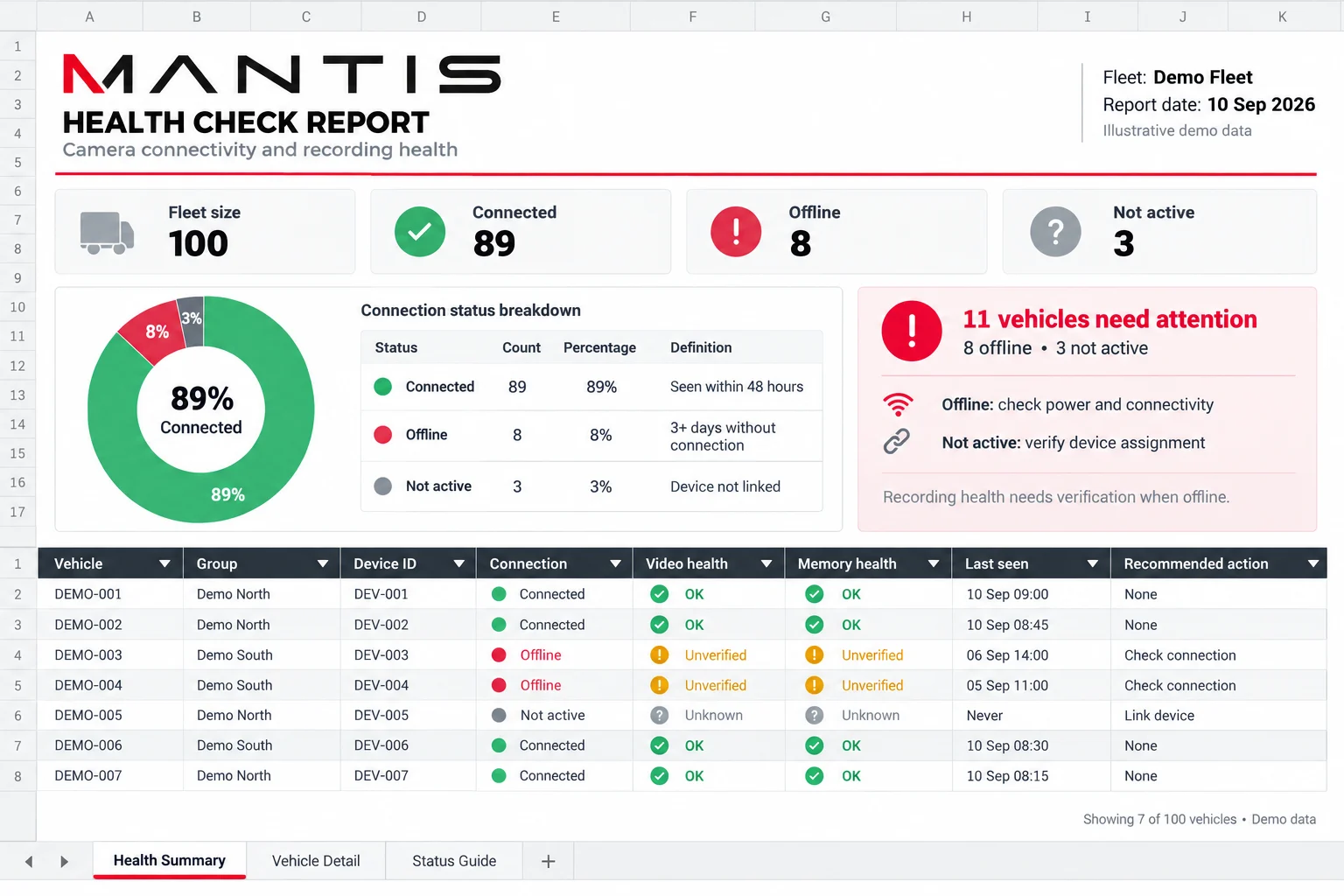
How will I know when a camera fails?
This is the one that matters. Cameras fail, ours included. Vibration, pressure washing, salt and hard duty cycles see to it, and a failed camera looks exactly like a working one until you go looking.
Ask: does the supplier monitor for faults, how are you told, and how quickly? If the answer depends on somebody at your end noticing, you have your answer.
In short
Multiple networks, no restrictions on your own footage, and somebody telling you when a camera stops working. All three are answerable in a first conversation.